Evolution


The theory of evolution is a naturalistic theory of the history of life on earth (this refers to the theory of evolution which employs methodological naturalism and is taught in schools and universities). In biology, evolution is understood as a process that results in changes in the genetic material of a population over time from adaptations of organisms to their environments. The study of evolution can be performed on different scales: microevolution reflects changes in DNA sequences and allele frequencies within a species over time (e.g. mutations, interbreeding), macroevolution reflects large-scale changes at the species level which result from the accumulation of numerous small changes on the microevolutionary scale. Natural selection is one commonly cited mechanism for driving evolution, but there are others such a genetic drift.[2] Currently, there are several theories of evolution. See also: Theistic evolution.
Evolution is often linked to Charles Darwin and natural selection. However, naturalist Alfred Russel Wallace was the co-discoverer of natural selection along with Charles Darwin. Wallace eventually came to believe that nature exhibited design and purpose with evolution.[3] His works on natural selection were around in the 1850s and some works on the uniqueness of man occurred in the 1860s.[4] Wallace's views challenge the Darwinian view of evolution and allow for a an overlap between design, intelligence, purpose with natural selection and evolution.[5][6] Before 1864, Wallace also believed that man was a result of natural selection, but by 1869, Wallace had changed his view since he felt that natural selection was insufficient to craft man's features like rationality, and postulated that higher intelligences may have been involved in man's evolution.[7]
Microevolution and natural selection are accepted to occur by all creationists,[8] but macroevolution and the limits of natural selection is what is usually disputed.[9][8]
The theory of evolution posits a process of transformation from simple life forms to more complex life forms, which has never been observed or duplicated in a laboratory or in the wild.[10] Dr. Nils Heribert-Nilsson, Professor of Botany at the University of Lund in Sweden and a member of the Royal Swedish Academy of Sciences, stated: "My attempts to demonstrate Evolution by an experiment carried on for more than 40 years have completely failed. At least, I should hardly be accused of having started from a preconceived antievolutionary standpoint."[11] Current ongoing long term evolutionary experiments such as the experiment on E.coli bacteria which "exceed 63,000 generations, equivalent to over 1 million years of human evolution" have not shown speciation or novel functions in the organism.[12]
The fossil record is often used as evidence in the creation versus evolution controversy. The fossil record does not support the theory of evolution and is one of the flaws in the theory of evolution.[13] In 1981, there were at least a hundred million fossils that were cataloged and identified in the world's museums.[14] Despite the large number of fossils available to scientists in 1981, evolutionist Mark Ridley, who currently serves as a professor of zoology at Oxford University, was forced to confess: "In any case, no real evolutionist, whether gradualist or punctuationist, uses the fossil record as evidence in favour of the theory of evolution as opposed to special creation."[15]
In addition to the evolutionary position lacking evidential support and being counterevidential, the great intellectuals in history such as Archimedes, Aristotle, St. Augustine, Francis Bacon, Isaac Newton, and Lord Kelvin did not propose an evolutionary process for a species to transform into a more complex version. Even after the theory of evolution was proposed and promoted heavily in England and Germany, most leading scientists were against the theory of evolution.[16]
Since World War II a majority of the most prominent and vocal defenders of the evolutionary position which employs methodological naturalism have been atheists and agnostics.[17] In 2007, "Discovery Institute's Center for Science and Culture...announced that over 700 scientists from around the world have now signed a statement expressing their skepticism about the contemporary theory of Darwinian evolution."[18]
On June 28, 2022, The Guardian published an article entitled Do we need a new theory of evolution? which indicated: "A new wave of scientists argues that mainstream evolutionary theory needs an urgent overhaul... Strange as it sounds, scientists still do not know the answers to some of the most basic questions about how life on Earth evolved. Take eyes, for instance. Where do they come from, exactly? The usual explanation of how we got these stupendously complex organs rests upon the theory of natural selection."[19]
Teaching evolution & views of experts

Picture above was taken at Johns Hopkins University
In 2024, the assistant to Russian Prime Minister Mikhail Mishustin, former Chechen Prime Minister Muslim Khuchiev called for a ban on the teaching of Darwinian theory in schools at a meeting of the All-Russian Parents' Committee. "Everyone knows that this is an erroneous theory, it goes against religion. This is the first step, I believe, in the spiritual degradation of children."[21]
In 2011, the results of a study was published indicating that most United States high school biology teachers are reluctant to endorse the theory of evolution in class. [22] In addition, in 2011, eight anti-evolution bills were introduced into state legislatures within the United States encouraging students to employ critical thinking skills when examining the evolutionary paradigm. In 2009, there were seven states which required critical analysis skills be employed when examining evolutionary material within schools.[23]
A 2005 poll by the Louis Finkelstein Institute for Social and Religious Research found that 60% of American medical doctors reject Darwinism, stating that they do not believe man evolved through natural processes alone.[24] Thirty-eight percent of the American medical doctors polled agreed with the statement that "Humans evolved naturally with no supernatural involvement." [25] The study also reported that 1/3 of all medical doctors favor the theory of intelligent design over evolution.[26] In 2010, the Gallup organization reported that 40% of Americans believe in young earth creationism.[27] In January 2006, the BBC reported concerning Britain:
| “ | Just under half of Britons accept the theory of evolution as the best description for the development of life, according to an opinion poll.
Furthermore, more than 40% of those questioned believe that creationism or intelligent design (ID) should be taught in school science lessons.[28] |
” |
Johns Hopkins University Press reported in 2014: "Over the past forty years, creationism has spread swiftly among European Catholics, Protestants, Jews, Hindus, and Muslims, even as anti-creationists sought to smother its flames."[29] In addition, China has the world's largest atheist population and the rapid growth of biblical creationism/Evangelical Christianity in China may have a significant impact on the number of individuals in the world who believe in evolution and also on global atheism (see: China and biblical creationism and Asian atheism).
History of the concept of natural selection
The theory of natural selection was published by naturalist Charles Darwin in his book On The Origin of Species by Means of Natural Selection or The Preservation of Favored Races in the Struggle for Life (1859) and also by Alfred Russel Wallace in his paper On the Tendency of Species to form Varieties; and on the Perpetuation of Varieties and Species by Natural Means of Selection (1858). Wallace's works on natural selection were around in the 1850s and some works on the uniqueness of man occurred in the 1860s.[4] Charles Lyell and Joseph Dalton Hooker decided on a joint publication at the Linnean Society of London in 1858 of Wallace's paper together with an extract from Darwin's 1844 essay and his letter to Asa Gray and summarized:[30][31]
| “ | The gentlemen having, independently and unknown to one another, conceived the same very ingenious theory to account for the appearance and perpetuation of varieties and of specific forms on our planet, and both fairly claim the merit of being original thinkers in this important line of inquiry; but neither of them having published his views, though Mr. Darwin has for many years past been repeatedly urged by us to do so, and both authors having now unreservedly placed their papers in our hands, we think it would best promote the interests of science that a selection from them should be laid before the Linnean Society. Taken in the order of their dates, they consist of:-
I. Extract from an unpublished Work on Species, by C. DARWIN, Esq., consisting of a portion of a Chapter entitled, "On the Variation of Organic Beings in a state of Nature; on the Natural Means of Selection; on the Comparison of Domestic Races and true Species.".. II. Abstract of a Letter from C. DARWIN, Esq., to Prof. ASA GRAY, Boston, US, dated Down, September 5th, 1857... III. On the Tendency of Varieties to depart indefinitely from the Original Type. By ALFRED RUSSEL WALLACE. |
” |
In a letter to Asa Gray, Darwin confided: "...I am quite conscious that my speculations run quite beyond the bounds of true science."[32]Prior to publishing the book, Darwin wrote in his private notebooks that he was a materialist, which is a type of atheist.[33] Darwin was a weak atheist/agnostic (see: religious views of Charles Darwin) .[34] Charles Darwin’s casual mentioning of a ‘creator’ in earlier editions of The Origin of Species appears to have been merely a ploy to downplay the implications of his materialistic theory.[35] The amount of credit Darwin actually deserves for the theory is disputed. [36] Darwin's theory attempted to explain the origin of the various kinds of plants and animals via the process of natural selection or "survival of the fittest".
One major difference between Darwin and Wallace is that Wallace argued that nature exhibited design and purpose with natural selection and evolution.[37] Wallace's view of evolution allows for an overlap between design, intelligence, purpose with natural selection and evolution.[5]
The basic principle behind natural selection is that in the struggle for life, some organisms in a given population will be better suited to their particular environment and thus have a reproductive advantage which increases the representation of their particular traits over time. Many years before Charles Darwin, there were several other individuals who published articles on the topic of natural selection.[38]
Darwin did not first propose in his book Origin of Species that man had descended from non-human ancestors. Darwin's theory of evolution was incorporated later in Darwin's book entitled Descent of Man.
History of the concept of evolution
As far as the history of the theory of evolution, although Darwin is well known when it comes to the early advocacy of the evolutionary position in the Western world, evolutionary ideas were taught by the ancient Greeks as early as the 7th century B.C.[39] The concept of naturalistic evolution differs from the concept of theistic evolution in that it states God does not guide the posited process of macroevolution.[40]
Belief in evolution and intuition
In 2012, the science news website Livescience.com published a news article entitled Belief in Evolution Boils Down to a Gut Feeling which indicated that research suggests that gut feelings trumped facts when it comes to evolutionists believing in evolution.[41] In January of 2012, the Journal of Research in Science Teaching published a study indicating that evolutionary belief is significantly based on gut feelings.[42][43] The January 20, 2012 article entitled Belief in Evolution Boils Down to a Gut Feeling published by the website Live Science wrote of the research: "They found that intuition had a significant impact on what the students accepted, no matter how much they knew and regardless of their religious beliefs."[44]
In response to evolutionary indoctrination and the uncritical acceptance of evolution by many evolutionists, the scientists at the organization Creation Ministries International created a Question evolution! campaign which poses 15 questions for evolutionists. In addition, leading creationist organizations have created lists of poor arguments that evolutionists should not use.[45] See also: Causes of evolutionary belief
Mutations and the Life Sciences
See also: Theories of evolution
Evolutionist Theodosius Dobzhansky wrote concerning the theory of evolution: "The process of mutation is the only known source of the new materials of genetic variability, and hence of evolution."[46] Concerning various theories of evolution, most evolutionists believe that the processes of mutation, genetic drift and natural selection created every species of life that we see on earth today after life first came about on earth although there is little consensus on how this process is allegedly to have occurred.[47]
Pierre-Paul Grassé, who served as Chair of evolutionary biology at Sorbonne University for thirty years and was ex-president of the French Academy of Sciences, stated: "Some contemporary biologists, as soon as they observe a mutation, talk about evolution. They are implicitly supporting the following syllogism: mutations are the only evolutionary variations, all living beings undergo mutations, therefore all living beings evolve....No matter how numerous they may be, mutations do not produce any kind of evolution." Grassé pointed out that bacteria which are the subject of study of many geneticists and molecular biologists are organisms which produce the most mutants.[48] Grasse then points that bacteria are considered to have "stabilized".[49] Grassé regards the "unceasing mutations" to be "merely hereditary fluctuations around a median position; a swing to the right, a swing to the left, but no final evolutionary effect."[50]
In addition, Harvard biologist Ernst Mayr wrote: "It must be admitted, however, that it is a considerable strain on one’s credulity to assume that finely balanced systems such as certain sense organs (the eye of vertebrates, or the bird’s feather) could be improved by random mutations."[51]

Creation scientists believe that mutations, natural selection, and genetic drift would not cause macroevolution.[52] Furthermore, creation scientists assert that the life sciences as a whole support the creation model and do not support the theory of evolution.[53] Homology involves the theory that macroevolutionary relationships can be demonstrated by the similarity in the anatomy and physiology of different organisms.[54] An example of a homology argument is that DNA similarities between human and other living organisms is evidence for the theory of evolution.[55] Creation scientists provide sound reasons why the homology argument is not a valid argument. Both evolutionary scientists and young earth creation scientists believe that speciation occurs, however, young earth creation scientists state that speciation generally occurs at a much faster rate than evolutionist believe is the case.[56]
Critics of the theory of evolution state that many of today's proponents of the evolutionary position have diluted the meaning of the term "evolution" to the point where it is defined as or the definition includes change over time in the gene pool of a population over time through such processes as mutation, natural selection, and genetic drift.[57] Dr. Jonathan Sarfati of Creation Ministries International declares concerning the diluted definition of the word "evolution":
| “ | ...many evolutionary propagandists are guilty of the deceitful practice of equivocation, that is, switching the meaning of a single word (evolution) part way through an argument. A common tactic, ‘bait-and-switch,’ is simply to produce examples of change over time, call this ‘evolution,’ then imply that the GTE [General Theory of Evolution] is thereby proven or even essential, and creation disproved. The PBS Evolution series and the Scientific American article are full of examples of this fallacy.[58][59] | ” |
See also: Atheism and equivocation
Biological diversity

Dr. Jonathan Sarfati wrote:
| “ | In contrast, creationists, starting from the Bible, believe that God created different kinds of organisms, which reproduced ‘after their kinds’ (Gen. 1:11–12, 21, 24–25). Each of these kinds was created with a vast amount of information. There was enough variety in the information in the original creatures so their descendants could adapt to a wide variety of environments.
All (sexually reproducing) organisms contain their genetic information in paired form. Each offspring inherits half its genetic information from its mother, and half from its father. So there are two genes at a given position (locus, plural loci) coding for a particular characteristic. An organism can be heterozygous at a given locus, meaning it carries different forms (alleles) of this gene... So there is no problem for creationists explaining that the original created kinds could each give rise to many different varieties. In fact, the originally created kinds would have had much more heterozygosity than their modern, more specialized descendants. No wonder Ayala pointed out that most of the variation in populations arises from reshuffling of previously existing genes, not from mutations. Many varieties can arise simply by two previously hidden recessive alleles coming together. However, Ayala believes the genetic information came ultimately from mutations, not creation. His belief is contrary to information theory, as shown in chapter 9 on ‘Design’.[60] |
” |
Origin of life
Dr. Don Batten of Creation Ministries International has pointed out that prominent evolutionists, such as PZ Myers and Nick Matzke, have indicated that a naturalistic postulation of the origin of life (often called abiogenesis), is part of the evolutionary model.[61] This poses a very serious problem for the evolutionary position as the evidence clearly points life being a product of design and not through naturalistic processes.[62]
Genetic entropy

The genetic entropy theory by Cornell University Professor Dr. John Sanford on eroding genomes of all living organisms due to mutations inherited from one generation to the next is declared to be one of the major challenges to evolutionary theory. The central part of Sanford’s argument is that mutations, represented by spelling mistakes in DNA, are accumulating so quickly in some creatures (and particularly in people) that natural selection cannot stop the functional degradation of the genome, let alone drive an evolutionary process that could lead for example, from apes into people.[63]
Sanford's book Genetic Entropy and the Mystery of the Genome explains why human DNA is inexorably deteriorating at an alarming rate, thus cannot be millions of years old.[64]
The evolutionist Michael Lynch wrote in the Proceedings of the National Academy of Sciences of the United States of America in a December 3, 2009 article entitled: Rate, molecular spectrum, and consequences of human mutation (taken from the abstract):
| “ | Finally, a consideration of the long-term consequences of current human behavior for deleterious-mutation accumulation leads to the conclusion that a substantial reduction in human fitness can be expected over the next few centuries in industrialized societies unless novel means of genetic intervention are developed." [65] | ” |
Genetic Code and Biological Information

- See main articles: Creation science, Intelligent design, and creationism
Creation scientists and intelligent design advocates point out that the genetic code (DNA code), genetic programs, and biological information argue for an intelligent cause in regards the origins question and assert it is one of the many problems of the theory of evolution.[67][68]
Dr. Walt Brown states the genetic material that controls the biological processes of life is coded information and that human experience tells us that codes are created only by the result of intelligence and not merely by processes of nature.[67] Dr. Brown also asserts that the "information stored in the genetic material of all life is a complex program. Therefore, it appears that an unfathomable intelligence created these genetic programs."[67]
To support his view regarding the divine origin of genetic programs Dr. Walt Brown cites the work of David Abel and Professor Jack Trevors who wrote the following:
| “ | No matter how many "bits" of possible combinations it has, there is no reason to call it "information" if it doesn't at least have the potential of producing something useful. What kind of information produces function? In computer science, we call it a "program." Another name for computer software is an "algorithm." No man-made program comes close to the technical brilliance of even Mycoplasmal genetic algorithms. Mycoplasmas are the simplest known organism with the smallest known genome, to date. How was its genome and other living organisms' genomes programmed? - David L. Abel and Jack T. Trevors, “Three Subsets of Sequence Complexity and Their Relevance to Biopolymeric Information,” Theoretical Biology & Medical Modelling, Vol. 2, 11 August 2005, page 8[69] | ” |
In the peer reviewed biology journal Proceedings of the Biological Society of Washington Dr. Stephen Meyer argues that no current materialistic theory of evolution can account for the origin of the information necessary to build novel animal forms and proposed an intelligent cause as the best explanation for the origin of biological information and the higher taxa.[70] The editor of the Proceedings of the Biological Society of Washington, Dr. Richard Sternberg, came under intense scrutiny and persecution for the aforementioned article published by Dr. Meyer.
Scientific consensus
See also: Theory of evolution and little consensus and Theories of evolution
There is little scientific consensus on how macroevolution is said to have happened and the claimed mechanisms of evolutionary change, as can be seen in the following quotes:
| “ | When discussing organic evolution the only point of agreement seems to be: "It happened." Thereafter, there is little consensus, which at first sight must seem rather odd. -(Simon Conway Morris, [palaeontologist, Department of Earth Sciences, Cambridge University, UK], "Evolution: Bringing Molecules into the Fold," Cell, Vol. 100, pp.1-11, January 7, 2000, p.11)[71] | ” |
| “ | "“The history of organic life is indemonstrable; we cannot prove a whole lot in evolutionary biology, and our findings will always be hypothesis. There is one true evolutionary history of life, and whether we will actually ever know it is not likely. Most importantly, we have to think about questioning underlying assumptions, whether we are dealing with molecules or anything else.” - Jeffrey H. Schwartz, Professor of Biological Anthropology, University of Pittsburgh, February 9, 2007[72] | ” |
| “ | "If it is true that an influx of doubt and uncertainty actually marks periods of healthy growth in a science, then evolutionary biology is flourishing today as it seldom has flourished in the past. For biologists collectively are less agreed upon the details of evolutionary mechanics than they were a scant decade ago. Superficially, it seems as if we know less about evolution than we did in 1959, the centennial year of Darwin's on the Origin of Species." - Niles Eldredge, "Time Frames: The Rethinking of Darwinian Evolution and the Theory of Punctuated Equilibria," Simon & Schuster: New York NY, 1985, p.14[73] | ” |
Pierre-Paul Grassé, who served as Chair of Evolution at Sorbonne University for thirty years and was ex-president of the French Academy of Sciences, stated the following:
| “ | Through use and abuse of hidden postulates, of bold, often ill-founded extrapolations, a pseudoscience has been created. It is taking root in the very heart of biology and is leading astray many biochemists and biologists, who sincerely believe that the accuracy of fundamental concepts has been demonstrated, which is not the case....
Today, our duty is to destroy the myth of evolution, considered as a simple, understood, and explained phenomenon which keeps rapidly unfolding before us. Biologists must be encouraged to think about the weaknesses of the interpretations and extrapolations that theoreticians put forward or lay down as established truths. The deceit is sometimes unconscious, but not always, since some people, owing to their sectarianism, purposely overlook reality and refuse to acknowledge the inadequacies and the falsity of their beliefs. - Pierre-Paul Grassé - Evolution of Living Organisms (1977), pages 6 and 8[74] |
” |
One of the regrettable consequences of Charles Darwin’s On the Origin of Species was the advent of the pseudoscience known as geopolitics.[75] [76]
Modern evolutionary synthesis revision
See: Modern evolutionary synthesis and Theories of evolution
Cases of Fraud, Hoaxes and Speculation on evolution

- See also: Evolution and Cases of Fraud, Hoaxes and Speculation and Atheism and deception and Theories of evolution and Evolution and just so stories
A notable case of a scientists using fraudulent material to promote the theory of evolution was the work of German scientist and atheist Ernst Haeckel. Noted evolutionist and Stephen Gould, who held a agnostic worldview[77] and promoted the notion of non-overlapping magesteria, wrote the following regarding Ernst Haeckel's work in a March 2000 issue of Natural History:
| “ | "Haeckel’s forceful, eminently comprehensible, if not always accurate, books appeared in all major languages and surely exerted more influence than the works of any other scientist, including Darwin…in convincing people throughout the world about the validity of evolution... Haeckel had exaggerated the similarities [between embryos of different species] by idealizations and omissions. He also, in some cases — in a procedure that can only be called fraudulent — simply copied the same figure over and over again. ... Haeckel’s drawings never fooled expert embryologists, who recognized his fudgings right from the start. Haeckel’s drawings, despite their noted inaccuracies, entered into the most impenetrable and permanent of all quasi-scientific literatures: standard student textbooks of biology... Once ensconced in textbooks, misinformation becomes cocooned and effectively permanent, because…textbooks copy from previous texts.... [W]e do, I think, have the right to be both astonished and ashamed by the century of mindless recycling that has led to the persistence of these drawings in a large number, if not a majority, of modern textbooks!"[78] | ” |
An irony of history is that the March 9, 1907 edition of the NY Times refers to Ernst Haeckel as the "celebrated Darwinian and founder of the Association for the Propagation of Ethical Atheism."[79]
Stephen Gould continues by quoting Michael Richardson of the St. George’s Hospital Medical School in London, who stated: "I know of at least fifty recent biology texts which use the drawings uncritically".[78]
Transitional Forms
See also: Evolution and the fossil record
As alluded to earlier, today there are over one hundred million identified and cataloged fossils in the world's museums.[80] If the evolutionary position was valid, then there should be "transitional forms" in the fossil record reflecting the intermediate life forms. Another term for these "transitional forms" is "missing links".

Charles Darwin admitted that his theory required the existence of "transitional forms." Darwin wrote: "So that the number of intermediate and transitional links, between all living and extinct species, must have been inconceivably great. But assuredly, if this theory be true, such have lived upon the earth."[82] However, Darwin wrote: "Why then is not every geological formation and every strata full of such intermediate links? Geology assuredly does not reveal any such finely-graduated organic chain; and this perhaps, is the most obvious and serious objection which can be urged against my theory."[83] Darwin thought the lack of transitional links in his time was because "only a small portion of the surface of the earth has been geologically explored and no part with sufficient care...".[84] As Charles Darwin grew older he became increasingly concerned about the lack of evidence for the theory of evolution in terms of the existence of transitional forms. Darwin wrote, "“When we descend to details, we cannot prove that a single species has changed; nor can we prove that the supposed changes are beneficial, which is the groundwork of the theory.”[85]
Scientist Dr. Michael Denton wrote regarding the fossil record:
| “ | "It is still, as it was in Darwin's day, overwhelmingly true that the first representatives of all the major classes of organisms known to biology are already highly characteristic of their class when they make their initial appearance in the fossil record. This phenomenon is particularly obvious in the case of the invertebrate fossil record. At its first appearance in the ancient Paleozoic seas, invertebrate life was already divided into practically all the major groups with which we are familiar today.[86] | ” |
Creationists assert that evolutionists have had over 140 years to find a transitional fossil and nothing approaching a conclusive transitional form has ever been found and that only a handful of highly doubtful examples of transitional fossils exist.[87] Distinguished anthropologist Sir Edmund R. Leach declared, "Missing links in the sequence of fossil evidence were a worry to Darwin. He felt sure they would eventually turn up, but they are still missing and seem likely to remain so."[88]
David B. Kitts of the School of Geology and Geophysics at the University of Oklahoma wrote that "Evolution requires intermediate forms between species and paleontology does not provide them…".[89]
David Raup, who was the curator of geology at the museum holding the world's largest fossil collection, the Field Museum of Natural History in Chicago, observed:
| “ | "[Darwin] was embarrassed by the fossil record because it didn't look the way he predicted it would .... Well, we are now about 120 years after Darwin, and knowledge of the fossil record has been greatly expanded. We now have a quarter of a million fossil species but the situation hasn't changed much. ... [W]e have even fewer examples of evolutionary transition than we had in Darwin's time." - David M. Raup, "Conflicts Between Darwin and Paleontology," Field Museum of Natural History Bulletin 50 (January 1979): 22-23, 24-25. | ” |
One of the most famous proponents of the theory of evolution was the late Harvard paleontologist Stephen Jay Gould. But Gould admitted:
| “ | The extreme rarity of transitional forms in the fossil record persists as the trade secret of paleontology. The evolutionary trees that adorn our textbooks have data only at the tips and nodes of their branches; the rest is inference, however reasonable, not the evidence of fossils...We fancy ourselves as the only true students of life’s history, yet to preserve our favored account of evolution by natural selection we view our data as so bad that we never see the very process we profess to study.[90] | ” |
For more information please see:
The Fossil Record quotes
Creationists can cite quotations which assert that no solid fossil evidence for the theory of evolution position exists:
| “ | "...I still think that to the unprejudiced, the fossil record of plants is in favour of special creation. - E.J.H. Corner (Professor of Botany, Cambridge University, England), “Evolution” in Anna M. MacLeod and L. S. Cobley (eds.), Contemporary Botanical Thought (Chicago: Quadrangle Books, 1961), p. 97[91][92] | ” |
| “ | "We then move right off the register of objective truth into those fields of presumed biological science, like extrasensory perception or the interpretation of man's fossil history, where to the faithful anything is possible - and where the ardent believer is sometimes able to believe several contradictory things at the same time." - Lord Solly Zuckerman (professor of anatomy at Birmingham University in England and chief scientific adviser to the British government from the time period of 1964 to 1971), Beyond The Ivory Tower, Toplinger Publications, New York, 1970, p. 19.[93][94] | ” |
| “ | "Fossil evidence of human evolutionary history is fragmentary and open to various interpretations. Fossil evidence of chimpanzee evolution is absent altogether". Henry Gee, “Return to the Planet of the Apes,” Nature, Vol. 412, 12 July 2001, p. 131.[95] | ” |
For more fossil record quotes please see: Fossil record quotes and Additional fossil record quotes
Paleoanthropology
For more information please see: Paleoanthropology and Human evolution

Paleoanthropology is an interdisciplinary branch of anthropology that concerns itself with the origins of early humans and it examines and evaluates items such as fossils and artifacts.[96] Dr. David Pilbeam is a paleoanthropologist who received his Ph.D. at Yale University and Dr. Pilbeam is presently Professor of Social Sciences at Harvard University and Curator of Paleontology at the Peabody Museum of Archaeology and Ethnology. In addition, Dr. Pilbeam served as an advisor for the Kenya government regarding the creation of an international institute for the study of human origins.[97]
Dr. Pilbeam wrote a review of Richard Leakey's book Origins in the journal American Scientist:
| “ | ...perhaps generations of students of human evolution, including myself, have been flailing about in the dark; that our data base is too sparse, too slippery, for it to be able to mold our theories. Rather the theories are more statements about us and ideology than about the past. Paleoanthropology reveals more about how humans view themselves than it does about how humans came about. But that is heresy.[98] | ” |
Dr. Pilbeam wrote the following regarding the theory of evolution and paleoanthropology:
| “ | I am also aware of the fact that, at least in my own subject of paleoanthropology, "theory" - heavily influenced by implicit ideas almost always dominates "data". ....Ideas that are totally unrelated to actual fossils have dominated theory building, which in turn strongly influence the way fossils are interpreted.[98] | ” |
Evolutionist and Harvard professor Richard Lewontin wrote in 1995 that "Despite the excited and optimistic claims that have been made by some paleontologists, no fossil hominid species can be established as our direct ancestor...."[99] In the September 2005 issue of National Geographic, Joel Achenbach asserted that human evolution is a "fact" but he also candidly admitted that the field of paleoanthropology "has again become a rather glorious mess."[100][101] In the same National Geographic article Harvard paleoanthropologist Dan Lieberman states, "We're not doing a very good job of being honest about what we don't know...".[101]
Concerning pictures of the supposed ancestors of man featured in science journals and the news media Boyce Rensberger wrote in the journal Science the following regarding their highly speculative nature:
| “ | Unfortunately, the vast majority of artist's conceptions are based more on imagination than on evidence. But a handful of expert natural-history artists begin with the fossil bones of a hominid and work from there…. Much of the reconstruction, however, is guesswork. Bones say nothing about the fleshy parts of the nose, lips, or ears. Artists must create something between an ape and a human being; the older the specimen is said to be, the more apelike they make it.... Hairiness is a matter of pure conjecture.[102][103] | ” |
Creation scientists concur with Dr. Pilbeam regarding the speculative nature of the field of paleoanthropology and assert there is no compelling evidence in the field of paleoanthropology for the various theories of human evolution.[104]
Microevolution vs. macroevolution


In 2011, Dr. Grady S. McMurtry declared:
| “ | It is a commonly held belief of evolutionists that small changes in genetic materials (mutations) will ultimately produce the presumed large changes necessary for one biological organism to change into a different kind of biological organism which is commonly called macroevolution. This belief is not valid. Scientifically, a mutation is a copying error of previously existing information contained in the DNA: a mutation is a structural change in the hereditary material which makes the offspring different from its parents.
It is acknowledged that the Laws of Genetics are conservative, they are not “creative.” Genetics only copies or rearranges the previously existing information and passes it on to the next generation. When copying information, you have only two choices; you can only copy it perfectly or imperfectly, you cannot copy something “more perfectly.” Mutations do not build one upon another beneficially. Mutations do not create new organs; they only modify existing organs and structures. Mutations overwhelmingly lose information; they do not gain it; therefore, mutations cause changes which are contrary of evolutionary philosophy. As a follow on, the addition of excess undirected energy will destroy the previously existing system. Indeed, you will never get an increase in the specifications on the DNA to create new organs without the input from a greater intelligence. Mutations affect and are affected by many genes and other intergenic information acting in combination with one another. The addition of the accidental duplication of previously existing information is detrimental to any organism. Mutations do produce “microevolution,” however, this term is far better understood as merely “lateral adaptation,” which is only variation within a kind, a mathematical shifting of gene frequency within a gene pool. The shifting of gene frequencies and a loss of information cannot produce macroevolution. As Dr. Roger Lewin commented after the 1980 University of Chicago conference entitled “Macroevolution”: “The central question of the Chicago conference was whether the mechanisms underlying microevolution can be extrapolated to explain the phenomena of macroevolution. … At the risk of doing violence to the positions of some of the people at the meeting, the answer can be given as a clear, No.” [Emphasis added] Dr. Roger Lewin, “Evolution Theory under Fire,” Science. Vol. 210, 21 November 1980. p. 883-887.[105] |
” |
In 1988, the prominent Harvard University biologist Ernst Mayr wrote in his essay Does Microevolution Explain Macroevolution?:
| “ | Among all the claims made during the evolutionary synthesis, perhaps the one that found least acceptance was the assertion that all phenomena of macroevolution can be ‘reduced to,' that is, explained by, microevolutionary genetic processes. Not surprisingly, this claim was usually supported by geneticists but was widely rejected by the very biologists who dealt with macroevolution, the morphologists and paleontologists. Many of them insisted that there is more or less complete discontinuity between the processes at the two levels—that what happens at the species level is entirely different from what happens at the level of the higher categories. Now, 50 years later the controversy remains undecided.
...In this respect, indeed, macroevolution as a field of study is completely decoupled from microevolution.[106] |
” |
Evolution and the second law of thermodynamics

See also: Creation Ministries International on the second law of thermodynamics and evolution
Creation Ministries International has a great wealth of information on why the second law of thermodynamics is incompatible with the evolutionary paradigm.
Some of their key resources on this matter are:
Punctuated Equilibrium
See also: Theories of evolution

Because the fossil record is characterized by the abrupt appearance of species and stasis in the fossil record the theory of punctuated equilibrium was developed and its chief proponents were Stephen Gould, Niles Eldridge, and Steven Stanley. According to the American Museum of Natural History the theory of Punctuated Equilibrium "asserts that evolution occurs in dramatic spurts interspersed with long periods of stasis".[107] Because Stephen Gould was the leading proponent of the theory of punctuated equilibrium much of the criticism of the theory has been directed towards Gould.[108][109] The development of a new evolutionary school of thought occurring due to the fossil record not supporting the evolutionary position was not unprecedented. In 1930, Austin H. Clark, an American evolutionary zoologist who wrote 630 articles and books in six languages, came up with an evolutionary hypothesis called zoogenesis which postulated that each of the major types of life forms evolved separately and independently from all the others.[110] Prior to publishing his work entitled The New Evolution: Zoogenesis, Clark wrote in a journal article published in the Quarterly Review of Biology that "so far as concerns the major groups of animals, the creationists seem to have the better of the argument. There is not the slightest evidence that any one of the major groups arose from any other."[111]
In 1995, there was an essay in the New York Review of Books by the late John Maynard Smith, a noted evolutionary biologist who was considered the dean of British neo-Darwinists, and Smith wrote the following regarding Gould's work in respect to the theory of evolution:
| “ | The evolutionary biologists with whom I have discussed his [Gould’s] work tend to see him as a man whose ideas are so confused as to be hardly worth bothering with, but as one who should not be publicly criticized because he is at least on our side against the creationists. All this would not matter, were it not that he is giving non biologists a largely false picture of the state of evolutionary theory."[112][113] | ” |
Noted journalist and author Robert Wright , wrote in 1996 that, “among top-flight evolutionary biologists, Gould is considered a pest—not just a lightweight, but an actively muddled man who has warped the public's understanding of Darwinism.”[114][115]
Creation scientist Dr. Jonathan Sarfati wrote regarding the implausibility of the theory of punctuated equilibrium and the implausibility of the idea of gradual evolution the following:
| “ | ...supporters of ‘jerky’ evolution saltationism and its relative, punctuated equilibria) point out that the fossil record does not show gradualism, and that the hypothetical transitional forms would be disadvantageous. But supporters of gradual evolution point out that large, information-increasing changes are so improbable that one would need to invoke a secular miracle. Creationists agree with both: punctuational evolution can’t happen, and gradual evolution can’t happen—in fact, particles-to-people evolution can’t happen at all![116] | ” |
Implausible Explanations

Individuals who are against the evolutionary position assert that evolutionary scientists employ extremely implausible "just so stories" to support their position and have done this since at least the time of Charles Darwin.[118] [119]
A well-known example of a "just so story" is when Darwin, in his Origin of the Species, wrote a chapter entitled "Difficulties on Theory" in which he stated:
| “ | "In North America the black bear was seen by Hearne swimming for hours with widely open mouth, thus catching, like a whale, insects in the water. Even in so extreme a case as this, if the supply of insects were constant, and if better adapted competitors did not already exist in the country, I can see no difficulty in a race of bears being rendered, by natural selection, more and more aquatic in their structure and habits, with larger and larger mouths, till a creature was produced as monstrous as a whale."[120] | ” |
Even the prominent evolutionist and geneticist Professor Richard Lewontin admitted the following:
| “ | "We take the side of science in spite of the patent absurdity of some of its constructs, in spite of its failure to fulfill many of its extravagant promises of health and life, in spite of the tolerance of the scientific community for unsubstantiated just-so stories, because we have a prior commitment, a commitment to materialism. It is not that the methods and institutions of science somehow compel us to accept a material explanation of the phenomenal world, but, on the contrary, that we are forced by our a priori adherence to material causes to create an apparatus of investigation and a set of concepts that produce material explanations, no matter how counter-intuitive, no matter how mystifying to the uninitiated. Moreover, that materialism is an absolute, for we cannot allow a Divine Foot in the door." - Richard Lewontin, ‘Billions and billions of demons’, The New York Review, January 9, 1997, p. 31[121] | ” |
Dr. Sarfati wrote regarding the theory of evolution the following:
| “ | The same logic applies to the dinosaur-bird debate. It is perfectly in order for creationists to cite Feduccia’s devastating criticism against the idea that birds evolved ‘ground up’ from running dinosaurs (the cursorial theory). But the dino-to-bird advocates counter with equally powerful arguments against Feduccia’s ‘trees-down’ (arboreal) theory. The evidence indicates that the critics are both right — birds did not evolve either from running dinos or from tree-living mini-crocodiles. In fact, birds did not evolve from non-birds at all![122] | ” |

Opponents to the theory of evolution commonly point to the following in nature as being implausibly created through evolutionary processes:
- various symbiotic relationships found in nature.[123][124][125]
- bacterial flagellum[126]
- homing[127]
- the origin of flight in the animal kingdom[128]
- human brain[129][130][131]
- migration[132]
- the whale[133][134]
- the Venus flytrap[135]
- the Bombardier beetle[136]
- the woodpecker[137]
Lastly, biochemist Michael Behe wrote the following:
| “ | "Molecular evolution is not based on scientific authority. There is no publication in the scientific literature—in prestigious journals, specialty journals, or book—that describes how molecular evolution of any real, complex, biochemical system either did occur or even might have occurred. There are assertions that such evolution occurred, but absolutely none are supported by pertinent experiments or calculations. Since no one knows molecular evolution by direct experience, and since there is no authority on which to base claims of knowledge, it can truly be said that—like the contention that the Eagles will win the Super Bowl this year—the assertion of Darwinian molecular evolution is merely bluster." - Michael J. Behe, Darwin’s Black Box (New York: The Free Press, 1996), p. 186[138] | ” |
Statements of Design
- See main article: Intelligent design and Argument from beauty and Atheists doubting the validity of atheism

Phillip E. Johnson cites Francis Crick in order to illustrate the fact that the biological world has the strong appearance of being designed:
| “ | "One of the world's most famous scientists, probably the most famous living biologist, is Sir Francis Crick, the British co-discoverer of the structure of DNA, a Nobel Prize winner... Crick is also a fervent atheistic materialist, who propounds the particle story. In his autobiography, Crick says very candidly biologists must remind themselves daily that what they study was not created, it evolved; it was not designed, it evolved. Why do they have to remind themselves of that? Because otherwise, the facts which are staring them in the face and trying to get their attention might break through. What we discovered when I developed a working group of scientists, philosophers, et al., in the United States was that living organisms look as if they were designed and they look that way because that is exactly what they are." - Evolution And Christian Faith by Phillip E. Johnson[139] | ” |
Stephen C. Meyer offers the following statement regarding the design of the biological world:
| “ | "During the last forty years, molecular biology has revealed a complexity and intricacy of design that exceeds anything that was imaginable during the late-nineteenth century. We now know that organisms display any number of distinctive features of intelligently engineered high-tech systems: information storage and transfer capability; functioning codes; sorting and delivery systems; regulatory and feed-back loops; signal transduction circuitry; and everywhere, complex, mutually-interdependent networks of parts. Indeed, the complexity of the biomacromolecules discussed in this essay does not begin to exhaust the full complexity of living systems. As even the staunch materialist Richard Dawkins has allowed, "Biology is the study of complicated things that give the appearance of having been designed for a purpose." Yet the materialistic science we have inherited from the late-nineteenth century, with its exclusive conceptual reliance on matter and energy, could neither envision nor can it now account for the biology of the information age." - The Origin of Life and the Death of Materialism by Stephen C. Meyer, Ph.D.[140] | ” |

The Stanford Encyclopedia of Philosophy states regarding a candid admission of Charles Darwin:
| “ | In 1885, the Duke of Argyll recounted a conversation he had had with Charles Darwin the year before Darwin's death:
In the course of that conversation I said to Mr. Darwin, with reference to some of his own remarkable works on the Fertilisation of Orchids, and upon The Earthworms, and various other observations he made of the wonderful contrivances for certain purposes in nature—I said it was impossible to look at these without seeing that they were the effect and the expression of Mind. I shall never forget Mr. Darwin's answer. He looked at me very hard and said, “Well, that often comes over me with overwhelming force; but at other times,” and he shook his head vaguely, adding, “it seems to go away.”(Argyll 1885, 244][141] |
” |
Atheists and views of design
Research and historical data indicate that a significant portion of atheists/agnostics often see their lives and the world as being the product of purposeful design (see: Atheism and purpose).[142]
Argument from beauty
See: Argument from beauty
Detractors of Evolution and the Scientific Journals
Advocates of the theory of evolution have often claimed that those who oppose the theory of evolution don't publish their opposition to the theory of evolution in the appropriate scientific literature (creationist scientists have peer-reviewed journals that favor the creationist position).[143][144][145] Recently, there has been articles which were favorable to the intelligent design position in scientific journals which traditionally have favored the theory of evolution.[146]
Unqualified to be a scientific theory

Karl Popper, a leading philosopher of science and originator of the falsifiability as a criterion of demarcation of science from nonscience,[147] stated that Darwinism is "not a testable scientific theory, but a metaphysical research programme."[148] Leading Darwinist and philosopher of science, Michael Ruse declared the concerning Popper's statement and the actions he took after making that statement: "Since making this claim, Popper himself has modified his position somewhat; but, disclaimers aside, I suspect that even now he does not really believe that Darwinism in its modern form is genuinely falsifiable."[149]
The issue of the falsifiability of the evolutionary position is very important issue and although offering a poor cure to the problem that Karl Popper described, committed evolutionists Louis Charles Birch & Paul R. Ehrlich stated in the journal Nature:
| “ | Our theory of evolution has become, as Popper described, one which cannot be refuted by any possible observations. Every conceivable observation can be fitted into it. It is thus outside of empirical science but not necessarily false. No one can think of ways in which to test it. Ideas, either without basis or based on a few laboratory experiments carried out in extremely simplified systems, have become part of an evolutionary dogma accepted by most of us as part of our training. The cure seems to us not to be a discarding of the modern synthesis of evolutionary theory, but more skepticism about many of its tenets.[150] | ” |
The Swedish cytogeneticist, Antonio Lima-De-Faria, who has been knighted by the king of Sweden for his scientific achievements, noted that "there has never been a theory of evolution".[151][152]
Atheism and the evolutionary paradigm are religious in nature and legal implications
See also: Suppression of alternatives to evolution and Atheism and the suppression of science
Many of the leaders of the atheist movement, such as the evolutionist and the new atheist Richard Dawkins, argue for atheism and evolution with religious fervor (See also: Atheism and evolution).
Daniel Smartt has identified seven dimensions that make up religion: narrative, experiential, social, ethical, doctrinal, ritual and material. It is not necessary in Smartt's model for every one of these to be present in order for something to be a religion.[153]. However, it can be argued that all seven are present in the case of atheism.[154][155] Please see: Atheism: A religionand Atheism and Atheism is a religion.
Atheism is a religion and its legal implications as far as the teaching of evolution
See also: Atheism is a religion and Atheism and evolution

Atheism is a religion and naturalistic notions concerning origins are religious in nature and both have legal implications as far as evolution being taught in public schools.[157][158][159]
John Calvert, a lawyer and intelligent design proponent wrote:
| “ | The Seventh Judicial Circuit of the Court of Appeals of the United States held that atheism is a religion. Therefore, it cannot be promoted by a public school. Currently, public schools are often unwittingly promoting atheism through a dogmatic and uncritical teaching of materialistic theories of origins.[160] | ” |
See also:
- Evolution as a secular origins myth
- Evolution, Liberalism, Atheism, and Irrationality
- Creation scientists tend to win the creation vs. evolution debates
- Atheism and deception
Evolution is a Religion and Not Science
See also: Evolution is a religion and Suppression of alternatives to evolution and Atheism and the suppression of science
Michael Ruse, the atheist and evolutionist science philosopher admitted, “Evolution is a religion. This was true of evolution in the beginning, and it is true of evolution still today.”[161] In the leading American science science journal Science, Michael Ruse published an article in 2003 entitled Is Evolution a Secular Religion?[162]
Creationist opponents of evolution commonly point out that evolution is a religion and not science.[163]
For more information, please see: Evolution is a religion
Evolution as a secular origins myth
Evolution is a secular origins myth of atheists, agnostics and members of other theologically liberal religious sects (theologically liberal religious sects often dismiss out of hand various supernatural events in history due to their hostility towards God and the supernatural). See: Evolution as a secular origins myth
The religion of evolutionism is contrary to creationism.[164]
Effect on Scientific Endeavors Outside the Specific Field of Biology

See also: List of atheist and agnostic pseudosciences
Stephen Wolfram in his book A New Kind of Science has stated that the Darwinian theory of evolution has, in recent years, "increasingly been applied outside of biology."[165]
Lysenkoism
Evolutionary theory played a prominent role in regard to atheistic communism.[166] Communists, in particular Stalinism, favored a version of Lamarckism called Lysenkoism developed by the atheist Trofim Denisovich Lysenko.[167] Lsyenko was made member of the Supreme Soviet and head of the Institute of Genetics of the Soviet Academy of Sciences.[168] Later Lysenko became President of the All-Union Academy of Agricultural Sciences.[169] Many geneticists were imprisoned and executed for their bourgeois science, and agricultural policies based on Lysenkoism that were adopted under the Communist leaders Joseph Stalin and Mao Zedong caused famines and the death of millions.[170]
Medical Science
The theory of evolution has had a negative effect on the field of medical science. According to Dr. Jerry Bergman the list of vestigial organs in humans has gone from 180 in 1890 to 0 in 1999.[171] Furthermore, Dr. Bergman states the following:
| “ | Few examples of vestigial organs in humans are now offered, and the ones that are have been shown by more recent research to be completely functional (and in many cases critically so, see Bergman and Howe)...
One popular book on the human body which discussed vestigial organs stated that next to circumcision ‘… tonsillectomy is the most frequently performed piece of surgery. Doctors once thought tonsils were simply useless evolutionary leftovers and took them out thinking that it could do no harm. Today there is considerable evidence that there are more troubles in the upper respiratory tract after tonsil removal than before, and doctors generally agree that simple enlargement of tonsils is hardly an indication for surgery...’[172] |
” |
Astronomy
Young earth creation scientist Dr. Jonathan Sarfati states that evolutionary thought has been applied to the field of astronomy.[173] Sarfati's claim is supported by the fact that astronomers do refer to the "evolution of the universe".[174] Sarfati asserts the evolutionary view has had a negative effect on astronomy and that arguments to support the proposed evolutionary time scales of billions of years via the field of astronomy are invalid.[175] Creationists can cite examples of scientists stating that evolutionary ideas in astronomy have failed to have any explanatory power:
| “ | ““...most every prediction by theorists about planetary formation has been wrong.” Scott Tremaine, as quoted by Richard A. Kerr, “Jupiters Like Our Own Await Planet Hunters,” Science, Vol. 295, 25 January 2002, p. 605.[176] | ” |
| “ | "Attempts to find a plausible naturalistic explanation of the origin of the Solar System began about 350 years ago but have not yet been quantitatively successful, making this one of the oldest unsolved problems in modern science.” - Stephen G. Brush, A History of Modern Planetary Physics, Vol. 3 (Cambridge, UK: Cambridge University Press, 1996), p. 91.[176] | ” |
| “ | “We don’t understand how a single star forms, yet we want to understand how 10 billion stars form.” Carlos Frenk, as quoted by Robert Irion, “Surveys Scour the Cosmic Deep,” Science, Vol. 303, 19 March 2004, p. 1750.[177] | ” |
| “ | “We cannot even show convincingly how galaxies, stars, planets, and life arose in the present universe.” Michael Rowan-Robinson, “Review of the Accidental Universe,” New Scientist, Vol. 97, 20 January 1983, p. 186.[178] | ” |
In 2001, Cristina Chiappini wrote concerning the Milky Way galaxy:
- ". . . it is an elegant structure that shows both order and complexity. . . . The end product is especially remarkable in the light of what is believed to be the starting point: nebulous blobs of gas. How the universe made the Milky Way from such simple beginnings is not altogether clear. - Cristina Chiappini, "The Formation and Evolution of the Milky Way," American Scientist (vol. 89, Nov./Dec. 2001), p. 506.[179]
Dr. Walt Brown provides numerous citations to the secular science literature that cite the failings of current old universe paradigm explanations in regards to the planets, stars, and galaxies.[176][177][178]
Origin of Life
Evolutionary thought has had an influence on origin of life research as well. For example, a 2004 article in the International Journal of Astrobiology is titled On the applicability of Darwinian principles to chemical evolution that led to life.[180] It is also clear that early origin of life researcher Aleksandr Oparin who proposed materialist ideas regarding the origin of life was influenced by evolutionary thought.[181] However, the current naturalistic explanations for the origin of life are inadequate.
Some evolutionists try to claim that the origin of life is not a part of the evolutionary paradigm, but this is not the case (see: Origin of life).
Richard Dawkins and evolutionary quackery
See: Richard Dawkins and evolutionary quackery
Age of the Earth and the Theory of Evolution
- See main articles: Young Earth Creationism and Geologic system and Atheists and historical illiteracy
As far as the evolutionary timeline posited by the evolutionary community, the various theories of evolution claim that the earth and universe are billions of years old and that macroevolutionary processes occurred over this time period.[182][183] William R. Corliss was a respected cataloger of scientific anomalies and the science magazine New Scientist had an article which focused on Mr. Corliss's career as a cataloger of scientific anomalies.[184] Mr. Corliss cataloged scores of anomalies which challenge the old earth geology paradigm.[185][186] Young earth creationist hold the earth and universe is approximately 6,000 years old.[182] Young earth creationist scientists state the following is true: there are multiple lines of evidence pointing to a young earth and universe; the old earth and universe paradigm has numerous anomalies and uses invalid dating methods, and there are multiple citations in the secular science literature that corroborate the implausibility of the old earth and universe paradigm (for details see: Young Earth Creationism).
See also:
Scientific Community Consensus and the Macroevolution Position
See also: Scientific consensus and evolutionary belief and Suppression of alternatives to evolution and Atheism and the suppression of science

A 1997 Gallup poll indicated that 55% of United States scientists believed that humans developed over a period of millions of years from less developed forms of life and that God had no part in the process, 40% believed in theistic evolution, and 5% of scientists believed that God created man fairly much in his current form at one time within the last 10,000 years.[189] As noted earlier, in 2007, "Discovery Institute's Center for Science and Culture...announced that over 700 scientists from around the world have now signed a statement expressing their skepticism about the contemporary theory of Darwinian evolution."[190]
Poll results regarding the number of scientists who are skeptical or opposed to the evolutionary view could be underreporting the actual amount of scientists who are skeptical of the evolutionary view or hold the creation science view. Poll results may not be as precise as they could be as creation science organizations report widespread discrimination against scientists who hold the creation science view.[191] On April 18, 2008 a film documentary by Ben Stein entitled Expelled: No Intelligence Allowed! was released to the public which documents the suppression of scientific freedom of scientists who are critical of the evolutionary position.[192][193] Such suppression is not surprising given that a poll among United States scientists showed that approximately 45% of scientists believed there was no God.[194] In addition, a survey found that 93% of the scientists who were members of the United States National Academy of Sciences do not believe there is a God.[195] Given this state of affairs, a future paradigm shift from the theory of evolution to a creation science position could be slow given the worldviews of many scientists.

Also, the current scientific community consensus is no guarantee of truth. The history of science shows many examples where the scientific community consensus was in error, was scientifically unsound, or had little or no empirical basis. For example, bloodletting was practiced from antiquity and still had many practitioners up until the late 1800s.[197] In his essay, A Paradigm Shift: Are We Ready? , Niranjan Kissoon, M.D. declared: "...history is rife with examples in which our best medical judgment was flawed. The prestigious British Medical Journal begun in 1828 chose the name Lancet to signal its scholarly intent and cutting edge therapy."[198]
In a 1991 BMJ (formerly called the British Medical Journal) article, Richard Smith (editor of BMJ at the time) wrote: "There are 30,000 biomedical journals in the world...Yet only about 15% of medical interventions are supported by solid scientific evidence, David Eddy professor of health policy and management at Duke University, told a conference in Manchester last week. This is partly because only 1% of the articles in medical journals are scientifically sound and partly because many treatments have never been assessed at all."[199]
Next, alchemy was at one time considered to be a legitimate scientific pursuit and was studied by such notable individuals as Isaac Newton, Robert Boyle, Roger Bacon, and Gottfried Leibniz.[200][201] Given the aforementioned weaknesses in the evolutionary position and given that the history of science shows there have been some notable paradigm shifts,[202][203]the scientific consensus argument for the macroevolutionary theory certainly cannot be called an invincible argument.
In addition, biblical creationists can point out examples where the scientific community was in error and the Bible was clearly correct. For example, until the 1970s the scientific consensus on how lions killed their prey was in error and the Bible turned out to be right in this matter.[204] Also, for centuries the scientific community believed that snakes could not hear and the 1988 edition of The New Encyclopedia Britannica stated the snakes could not hear but that was mistaken and the Bible was correct in this matter.[205][206] In addition, 19th century European naturalists were wrong concerning a matter regarding ant behavior and the Bible was correct.[207] Many creationists such as the creationists at Creation Ministries International assert that the Bible contains knowledge that shows an understanding of scientific knowledge Bible scientific foreknowledge beyond that believed to exist at the time the Bible was composed.[208][209] In addition, Christianity had a profound influence in regards to the development of modern science.
For more information see: Scientific consensus and evolutionary belief
Social Effects of the Theory of Evolution
For more information please see: Social effects of the theory of evolution and Evolutionary racism and Atheism and Evolution and World War I and Darwinism and Atheism, evolution and morality and Irreligion/religion and war
There have been significant and negative social ramifications of the adoption of the theory of evolution. The theory has been foundational to Social Darwinism, Nazism and Communism and has also been a source of racism.[210]
Belief in evolution and sexual immorality
See also: Evolutionary belief and sexual immorality and Liberal Christianity and marital infidelity

In July of 2000, Creation Ministries International reported:
| “ | For years, many people have scoffed at any suggestion that the evils in society could be linked with the teaching of the theory of evolution. But new research has confirmed what Bible-believers have known all along—that the rising acceptance of Darwin’s theory is related to declining morality in the community.
The research survey of 1535 people, conducted by the Australian National University, revealed that belief in evolution is associated with moral permissiveness. Darwin himself apparently feared that belief in evolution by the common man would lead to social decay. The survey showed that people who believed in evolution were more likely to be in favour of premarital sex than those who rejected Darwin’s theory. Another issue that highlighted the contrast between the effect of evolutionary ideas and that of biblical principles was that Darwinians were reported to be ‘especially tolerant’ of abortion. In identifying the primary factors determining these differences in community attitudes, the author of the research report, Dr Jonathan Kelley, said: ‘The single most important influence after church attendance is the theory of evolution.’[211] |
” |
Also, according to atheist philosopher David Stove the theory of evolution was influential in regards to the sexual revolution.[212]
For more information, please see:
Evolution and Nazism

See also: World War I and Darwinism and Irreligion/religion and war
The staunch evolutionist Stephen Gould admitted the following:
| “ | Haeckel was the chief apostle of evolution in Germany.... His evolutionary racism; his call to the German people for racial purity and unflinching devotion to a "just" state; his belief that harsh, inexorable laws of evolution ruled human civilization and nature alike, conferring upon favored races the right to dominate others; the irrational mysticism that had always stood in strange communion with his brave words about objective science - all contributed to the rise of Nazism. - Stephen J. Gould, "Ontogeny and Phylogeny," Belknap Press: Cambridge MA, 1977, pp.77-78).[213] | ” |
Adolf Hitler wrote the following evolutionary racist material in his work Mein Kampf:
| “ | If nature does not wish that weaker individuals should mate with the stronger, she wishes even less that a superior race should intermingle with an inferior one; because in such cases all her efforts, throughout hundreds of thousands of years, to establish an evolutionary higher stage of being, may thus be rendered futile.[214] | ” |
Hitler also wrote in Mein Kampf:
| “ | The stronger must dominate and not blend with the weaker, thus sacrificing his own greatness. Only the born weakling can view this as cruel, but he, after all, is only a weak and limited man; for if this law did not prevail, any conceivable higher development (Hoherentwicklung) of organic living beings would be unthinkable.[215] | ” |
Dr. Robert E.D. Clark also wrote:
| “ | “Adolf Hitler’s mind was captivated by evolutionary teaching — probably since the time he was a boy. Evolutionary ideas — quite undisguised — lie at the basis of all that is worst in Mein Kampf — and in his public speeches.”[216] | ” |
Dr. Josef Mengele's evolutionary thinking was in accordance with social Darwinist theories that Adolph Hitler and a number of German academics found appealing.[217][218] Dr. Joseph Mengele studied under the leading proponents the "unworthy life" branch of evolutionary thought.[219] Dr. Mengele was one of the most notorious individuals associated with Nazi death camps and the Holocaust.[220] Mengele obtained an infamous reputation due to his experiments on twins while at Auschwitz-Birkenau.[221]
B. Wilder-Smith wrote the following regarding Nazism and the theory of evolution:
| “ | One of the central planks in Nazi theory and doctrine was …evolutionary theory [and] … that all biology had evolved … upward, and that … less evolved types … should be actively eradicated [and] … that natural selection could and should be actively aided, and therefore [the Nazis] instituted political measures to eradicate … Jews, and … blacks, whom they considered as “underdeveloped”.’[222] | ” |
Pulitzer Prize winning author Marilynne Robinson wrote the following regarding Hitler's racism in the November 2006 issue of Harper’s Magazine:
| “ | While it is true that persecution of the Jews has a very long history in Europe, it is also true that science in the twentieth century revived and absolutized persecution by giving it a fresh rationale — Jewishness was not religious or cultural, but genetic. Therefore no appeal could be made against the brute fact of a Jewish grandparent...
There is indeed historical precedent in the Spanish Inquisition for the notion of hereditary Judaism. But the fact that the worst religious thought of the sixteenth century can be likened to the worst scientific thought of the twentieth century hardly redounds to the credit of science."[223] |
” |

As noted earlier, evolutionary ideas significantly influenced the thinking of the nineteenth and twentieth-century Communists.[225][226] Karl Marx wrote in a letter the following, "Darwin's book is very important and serves me as a basis in natural science for the class struggle in history." Darwin's ideas also influenced the thinking of Engels, Vladimir Lenin, and Joseph Stalin.[227]
Darwinism and communism
Governments under the banner of atheistic communism have caused the death of somewhere between 40 million to 260 million human lives.[228] Dr. R. J. Rummel, professor emeritus of political science at the University of Hawaii, is the scholar who first coined the term democide (death by government). Dr. R. J. Rummel's mid estimate regarding the loss of life due to communism is that communism caused the death of approximately 110,286,000 people between 1917 and 1987.[229]
Darwinism and racism
See also: Evolutionary racism
Previously it was mentioned that evolutionary ideas contributed to the scourge of racism. [230][231] Charles Darwin and Thomas Huxley contributed greatly to the theory of evolution broadly being accepted in the 1900s. [232] Darwin, Huxley, and the 19th-century evolutionists were racist in sentiment and believed the white race was superior. [233] For example, Charles Darwin wrote in his work The Descent of Man and Selection in Relation to Sex the following:
| “ | At some future period not very distant as measured by centuries, the civilised races of man will almost certainly exterminate and replace the savage races throughout the world. At the same time the anthropomorphous apes...will no doubt be exterminated. The break between man and his nearest Allies will then be wider, for it will intervene between man in a more civilised state, as we may hope, even than the Caucasian, and some ape as low as the baboon, instead of as now between the Negro or Australian and the gorilla.[234] | ” |

John C. Burnham wrote, in the journal Science, the following in regards to the theory of evolution and racism:
| “ | After 1859, the evolutionary schema raised additional questions, particularly whether or not Afro-Americans could survive competition with their white near-relations. The momentous answer was a resounding no.... The African was inferior — he represented the missing link between ape and Teuton."[235] | ” |
Harvard University's Stephen Jay Gould stated, "Biological arguments for racism may have been common before 1859, but they increased by orders of magnitude following the acceptance of evolutionary theory."[236] Recent racism directed at Michelle Obama was the result of evolutionary racism.[237]
Evolutionary psychologist Satoshi Kanazawa's comments about black women and African history
Dr. Satoshi Kanazawa is an evolutionary psychologist at the London School of Economics. Dr. Kanazawa publishes a blog on the Psychology Today website called The Scientific Fundamentalist.
In 2011, Dr. Kanazawa published the following inappropriate comment which was later pulled by the Psychology Today website:
| “ | It is very interesting to note that, even though black women are objectively less physically attractive than other women, black women (and men) subjectively consider themselves to be far more physically attractive than others.[238] | ” |
Kanazawa has a "Savanna principle" hypothesis which speculates that societal problems are due to the human brain supposedly evolving in Africa hundreds of thousands of years ago in a very different environment from modern society.[239]
Darwinism and brutality in war
Historian Jacques Barzun observed how Darwinism caused the horrendous brutality of the wars leading up to WWI: "Since in every European country between 1870 and 1914 there was a war party demanding armaments, an individualist party demanding ruthless competition, an imperialist party demanding a free hand over backward peoples, a socialist party demanding the conquest of power and a racialist party demanding internal purges against aliens — all of them, when appeals to greed and glory failed, invoked Spencer and Darwin, which was to say science incarnate."[240]
Darwinism as one of the causes of the collapse of the British Empire
See: Darwinism as one of the causes of the collapse of the British Empire
Genetics, Homosexuality, Evolutionary Paradigm, and Creation Science
See: Genetics, Homosexuality, Evolutionary Paradigm, and Creation Science
Common behavior of online evolutionists
In February of 2010, the news organization The Telegraph reported that atheist and evolutionist Richard Dawkins was "embroiled in a bitter online battle over plans to rid his popular internet forum for atheists of foul language, insults and 'frivolous gossip'."[241] Given that atheists often have poor social skills and are often contentious, it is not surprising the online dispute was bitter (See: Atheism and social skills and Atheist factions). In addition, Richard Dawkins has a reputation for being abrasive.
In 2010, the Christian apologetics website True Free Thinker wrote: "Scienceblogger Chad Orzel described the commentators on PZ Myers ' Scienceblogs.com site Pharyngula, and other Scienceblogs.com commentators, as "screechy monkeys."[242]
In addition, there is a widespread problem with atheist cyberbullying on YouTube toward Christian and creationist YouTube channels. CreationWiki has developed a web page entitled Creationist YouTube video designed to show creationists how to thwart atheist/evolutionist cyberbullies.
Creation Scientists Tend to Win the Creation-Evolution Debates

- For additional information please see the article: Atheism and Debate and Atheism and deception and Creation vs. evolution debates and Atheism and cowardice
Creation scientists tend to win the Creation-Evolution debates and many have been held since the 1970's particularly in the United States (see: Creation vs. evolution debates).
In August of 1979, Dr. Henry Morris reported in an Institute for Creation Research letter the following: “By now, practically every leading evolutionary scientist in this country has declined one or more invitations to a scientific debate on creation/evolution.” Morris also said regarding the creation scientist Duane Gish (who had over 300 formal debates): “At least in our judgment and that of most in the audiences, he always wins.”[243][244]
Generally speaking, leading evolutionists no longer debate creation scientists because creation scientists tend to win the creation vs. evolution debates (see: Creation vs. evolution debates).[245] Also, the atheist and evolutionist Richard Dawkins has shown inconsistent and deceptive behavior concerning his refusal creation scientists. Evolutionists and atheists inconsistency concerning debating creationists was commented on by the Christian apologetic website True Free Thinker which declared: "Interestingly enough, having noted that since some atheists refuse to debate “creationists” but then go on to debate some of those people but not others, it is clear that they are, in reality, being selective and making excuses for absconding from difficulties..."[246]
Theory of Evolution, Liberalism, Atheism, and Irrationality

- See also: Evolution, Liberalism, Atheism, and Irrationality and
Theory of evolution and liberalism and Atheism and Evolution and Atheism and deception
As alluded to earlier, in the United States, CBS News reported in October of 2005 that the Americans most likely to believe only in the theory of evolution are liberals.[248]
| “ | The CBS News reported the following:
Americans most likely to believe in only evolution are liberals (36 percent), those who rarely or never attend religious services (25 percent), and those with a college degree or higher (24 percent). White evangelicals (77 percent), weekly churchgoers (74 percent) and conservatives (64 percent), are mostly likely to say God created humans in their present form.[249] |
” |
Given that liberalism is so prevalent in academia, it is not entirely surprising that college graduates are indoctrinated into the evolutionary paradigm via evolutionary propaganda.
Despite the aforementioned lack of evidence for the evolutionary position and the aforementioned counter evidential nature of the evolutionary paradigm, atheists and liberals persist in advocating the evolutionary paradigm. The continued support of the atheist and liberal community for the evolutionary paradigm is not surprising given that the Wall Street Journal reported:
| “ | ...a comprehensive new study released by Baylor University yesterday, shows that traditional Christian religion greatly decreases belief in everything from the efficacy of palm readers to the usefulness of astrology. It also shows that the irreligious and the members of more liberal Protestant denominations, far from being resistant to superstition, tend to be much more likely to believe in the paranormal and in pseudoscience than evangelical Christians....
This is not a new finding. In his 1983 book "The Whys of a Philosophical Scrivener," skeptic and science writer Martin Gardner cited the decline of traditional religious belief among the better educated as one of the causes for an increase in pseudoscience, cults and superstition. He referenced a 1980 study published in the magazine Skeptical Inquirer that showed irreligious college students to be by far the most likely to embrace paranormal beliefs, while born-again Christian college students were the least likely.[250] |
” |
Evolutionary belief, irreligion, extraterrestrial life, UFOlogy and other pseudoscience
See: Irreligion and superstition
Liberalism, Charles Darwin, and Denial of Creation
See also: Atheism and deception and Evolution as a secular origins myth and Suppression of alternatives to evolution and Atheism and the suppression of science

Many liberals when faced with the compelling data for creation science and against the evolutionary paradigm irrationally attempt to suppress the evidence and engage in denial like the atheist Charles Darwin (see: religious views of Charles Darwin ) who late in life is reported to often have overwhelming thoughts that the world was designed.[252][253] Creation Ministries International describes such irrational thinking in the following manner:
| “ | Underpinning this abandonment of faith in God is the widespread acceptance of evolutionary thinking — that everything made itself by natural processes; that God is not necessary. There is ‘design’, such people will admit, but no Designer is necessary. The designed thing designed itself! This thinking, where the plain-as-day evidence for God’s existence (Rom. 1:19–20) is explained away, leads naturally to atheism (belief in no God) and secular humanism (man can chart his own course without God). Such thinking abounds in universities and governments today).[254] | ” |
The evolutionist and immunologist Dr. Scott Todd, an immunologist at Kansas State University, perfectly epitomized the irrational evolutionary denial of the evidence for creation in his correspondence to the science journal Nature. Dr. Scott wrote: "Even if all the data point to an intelligent designer, such an hypothesis is excluded from science because it is not naturalistic".[255]
Although he is not a creationist, the atheist philosopher John Gray admitted in 2008 in The Guardian:
| “ | A great deal of modern thought consists of secular myths - hollowed-out religious narratives translated into pseudo-science. Dennett's notion that new communications technologies will fundamentally alter the way human beings think is just such a myth.[256] | ” |
For more information please see: Evolution as a secular origins myth
Ben Stein Interview with the Evolutionist Richard Dawkins
In the movie Expelled: No Intelligence Allowed, Ben Stein demonstrated the folly of evolutionism in his interview with the prominent evolutionist and atheist Richard Dawkins (A clip of the interview has been uploaded to YouTube ).
The Discovery Institute provides a transcript of part of the interview along with some commentary:
| “ | BEN STEIN: "What do you think is the possibility that Intelligent Design might turn out to be the answer to some issues in genetics or in evolution?"
DAWKINS: "Well, it could come about in the following way. It could be that at some earlier time, somewhere in the universe, a civilization evolved, probably by some kind of Darwinian means, probably to a very high level of technology, and designed a form of life that they seeded onto perhaps this planet. Now, um, now that is a possibility, and an intriguing possibility. And I suppose it's possible that you might find evidence for that if you look at the details of biochemistry, molecular biology, you might find a signature of some sort of designer."
Years ago, everybody knew that the earth was flat. Everybody knew that the sun revolved around the earth. Today, everybody knows that life on earth is either the result of random evolution or the work of a supernatural God. Or is it? In "Message from the Designers", Rael presents us with a third option: that all life on earth was created by advanced scientists from another world. Richard Dawkins and Rael; "clear thinking" kindred spirits! [257] |
” |
In the Ben Stein/Richard Dawkins interview, Richard Dawkins was also asked what the probability is of God's existence is and a rationale for that estimation. Dawkins gave a very inept reply to Ben Stein concerning this issue.
Creationist Video Interview of Richard Dawkins Being Stumped by a Creationist
A video clip featuring Richard Dawkins became widely available to the public,[258] showing Dawkins being stumped by a question from the creationist interviewer. A shortened version has been translated into 10 languages. The clip was part of an interview included in the video and DVD From a Frog to Prince, produced by Creation Ministries International about the genetic information required by evolution, and the interviewer is asking Dawkins for an example of genetic information arising from a mutation.
In later interviews, Dawkins claims that he was not stumped but instead shocked when he realized that the interviewer was a creationist, and the video was edited in a way to make him look like he was unable to answer the question.[259] However, the question came after he had that realization, and after the creationists negotiated with Dawkins and he agreed to continue.[260] Richard Dawkins still hasn't provide any examples of genetic information being created by evolution.
Methodological Naturalism Ideology In Evolutionary Thought
As mentioned earlier, evolutionary thought (which employs methodological naturalism) has had an influence on origin of life research as well (for example, a 2004 article in the International Journal of Astrobiology is titled On the applicability of Darwinian principles to chemical evolution that led to life).[261] The Nobel Prize winning biologist Francis Crick described himself as an agnostic with "a strong inclination towards atheism."[262]In 1992, the science magazine Scientific American published an interview which explored Sir Francis Crick's belief in the hypothesis Directed Panspermia as a proposed hypthesis for the origin of life on earth.[263] Directed panspermia posits concerning the question of origin of life on earth that "organisms were deliberately transmitted to the earth by intelligent beings on another planet."[264] Michael Behe wrote regarding the Scientific American interview the following:
| “ | The primary reason Crick subscribes to this unorthodox view is that he judges the undirected origin of life to be a virtually insurmountable obstacle, but he wants a naturalistic explanation. [265] | ” |
When commenting on the hypothesis of Directed Panspermia Creation Ministries International wrote that Francis "Crick’s atheistic faith leads to absurd pseudoscience".[266]
Supppession of scientific inquiry concerning alternative theories of origins
see also: Suppression of alternatives to evolution
There exists widespread suppression of creation science and intelligent design, ideas which offer alternative explanations of origins than do the various theories of evolution (for more information please see: Suppression of alternatives to evolution).
Inflated claims of evolutionists growing in frequency and intensity
Please see: Inflated claims of evolutionists growing in frequency and intensity Atheism and deception
Recent uptick of Lamarckism school of evolutionary thought
As can be seen below, there has been an uptick in macroevolutionary Lamarckism pseudoscience due to microevolutionary processes/changes that have been discovered in organisms related to Lamarckism:
- Darwin’s Lamarckism vindicated? by Creation Ministries International
- Mutations, epigenetics and the question of information by Creation Ministries International
However, due to intellectual inertia, the evolutionist indoctrination of students into Neo-Darwinism (also called the Modern evolutionary synthesis) and people's natural tendency to resist change, the neo-darwinian school of evolutionary thought is still dominant within the evolutionary biology community (see also: Paradigm shift).
The weight of evidence still supports the biblical creation model (see also: Creation science). See also: Atheist indoctrination
Causes of evolutionary belief
See also: Causes of evolutionary belief
A number of articles have been written concerning the reasons why evolutionists commonly hold their evolutionary views:
- Evolutionary gut feelings, "Belief in Evolution Boils Down to a Gut Feeling" (Cites study in Live Science article)
See also:
- Morals decline linked to belief in evolution (cites Australian National University study)
Creation vs. Evolution Videos
Creation vs. evolution news
Further Reading (including free on-line versions)
- Top 15 Evidences for God and Creation by Jason Browning
- J.D. Mitchell, The Creation Dialogues - A Response to the Position of the American Association for the Advancement of Science on Evolution, Christianity and the Bible, Pleasant Word (Winepress Pub), 2010 ISBN 1414118007[267][268]
- Dr. Grady S. McMurtry, Creation: Our Worldview, TEC Publications, Columbus, GA 2010 ISBN 0-9674006-1-9
- Duane Gish, Evolution: The Fossils Still Say No!, El Cajon: Institute for Creation Research, 1996[269] ISBN 9780890511121
- Jonathan Sarfati, Refuting Evolution, Master Books, 1999 (Free on-line version) ISBN 0890512582
- Jonathan Sarfati, Refuting Evolution 2, Master Books, 2002,(Free on-line version) ISBN 0890513872
- Richard Weikart, Hitler's Ethic: The Nazi Pursuit of Evolutionary Progress ISBN 978-0-230-61807-7
- Richard Weikart, From Darwin to Hitler: Evolutionary Ethics, Eugenics, and Racism in Germany ISBN 9781403972019
- R.L. Wysong, The Creation-Evolution Controversy, Inquiry Press (Midland, MI), 1976. ISBN 978-0-918-112-02-6[270]
- Phillip Johnson, Darwin on Trial. InterVarsity Press, Downers Grove, Illinois. 1991[271] ISBN 0-8308-1324-1
- R. C. Sproul, Not a Chance: The Myth of Chance in Modern Science and Cosmology, Baker Book House: 1994[272] ISBN 080105852X
Social effects of the theory of evolution
- Flight from the Absolute: Cynical Observations on the Postmodern West. Volume II by Paul Gosselin
- Flight from the Absolute: Cynical Observations on the Postmodern West. Volume II - Paul Gosselin discusses his book (video)
See also: Biblical creation journals
Some prominent biblical creation publications are given below:
- Journal of Creation - Peer reviewed
- Creation Research Society Quarterly Journal - peer reviewed
See also
- Suppression of alternatives to evolution
- Atheism, naturalism and the origin of the universe
- List of atheist and agnostic pseudosciences
- Creation vs. Evolution Videos
- Atheists and supernatural beliefs
- Atheism and Evolution
- Rebuttals to atheist arguments
- Atheism and deception
- Christianity and Science
- Atheism and science
- Evolution quotes
- Evolution articles
- Atheists and genetic mutations
- Science evolves
External Links and other links
- 15 questions for evolutionists
- Question evolution! campaign
- Creation Ministries International - Over 7,000 articles on the creation vs. evolution issue
- Creation vs. evolution news
Other resources:
- Evidence and arguments against evolution
- The Nine Great 'Proofs' for Evolution: and Why They Are All False!
- Evolution
- Human evolutionary theory
- Theory of evolution
- Theory of evolution by Windmill Ministries
- Intelligent Design vs. Evolution
Social effects of Darwinism:
Anti-Darwinism/creationist, French/English website:
References
- ↑ The Duke of Argyll and Mr. Darwin - As told in Glasgow
- ↑ Evolution - Nature (Journal)
- ↑ Alfred Russel Wallace. 1911. The World of Life: A Manifestation of Creative Power, Directive Mind and Ultimate Purpose
- ↑ 4.0 4.1 Alfred Russel Wallace. Natural Selection and Tropical Nature: Essays on Descriptive and Theoretical Biology important works on natural selection: "The Law which has Regulated the Introduction of New Species" (1855) and of course "On the Tendency of Varieties to Depart Indefinitely from the Original Type" (1858); on the the limits on natural selection and man see "Limits of Natural Selection as Applied to Man" (1869)
- ↑ 5.0 5.1 Flannery, M.A. Alfred Russel Wallace’s Intelligent Evolution and Natural Theology. Religions 2020, 11, 316. https://doi.org/10.3390/rel11060316
- ↑ Flannery, Michael A. 2011. Alfred Russel Wallace’s Theory of Intelligent Evolution: How Wallace’s World of Life Challenged Darwinism, rev ed. Riesel: Erasmus Press
- ↑ Malcolm Jay Kottler. Alfred Russel Wallace, the Origin of Man, and Spiritualism. Isis, Vol. 65, No. 2 (Jun., 1974), pp. 144-192 Published by: The University of Chicago Press on behalf of The History of Science Society Stable URL: http://www.jstor.org/stable/229369."In 1864 Wallace was firmly committed to the action of natural selection alone in the development of man. In 1869 he first expressed publicly his new point of view that natural selection was unable to explain the origin of man and that higher intelligences guiding man's development were required."
- ↑ 8.0 8.1 Numbers RL. Ironic Heresy: How Young-Earth Creationists Came to Embrace Rapid Microevolution by Means of Natural Selection. In: Lustig A, Richards RJ, Ruse M, eds. Darwinian Heresies. Cambridge University Press; 2004:84-100.
- ↑ Evolution - Answers in Genesis
- ↑
- Russell Grigg and Dr. Jonathan Sarfati, [http://www.creation.com/content/view/4280 Intelligent Design—‘A War on Science’ says the BBC
- Paul McHugh, The Weekly Standard, Teaching Darwin: Why we're still fighting about biology textbook. March 28, 2005
- ↑
- [http://www.custance.org/Library/Volume4/Part_I/chapter6.html Nilsson, Heribert, Synthetische Artbildung, Verlag CWK Gleerup, Lund, Sweden, 1953, page 1185
- Quotes to note
- ↑ Van Hofwegen DJ, Hovde CJ, Minnich SA.2016.Rapid Evolution of Citrate Utilization by Escherichia coli by Direct Selection Requires citT and dctA. J Bacteriol198:.https://doi.org/10.1128/jb.00831-15
- ↑
- ↑ Porter Kier, quoted in New Scientist, January 15, 1981, p. 129
- ↑ Mark Ridley, 'Who doubts evolution?', New Scientist, vol. 90, 25 June 1981, p. 831
- ↑
- ↑
- Dr. Don Batten, A Who’s Who of evolutionists Creation 20(1):32, December 1997.
- Jonathan Sarfati, Ph.D.,F.M., Refuting Evolution, Chapter 1, Facts and Bias
- ↑ http://www.discovery.org/a/2732
- ↑ Do we need a new theory of evolution? by Stephen Buranyi, The Guardian, June 28, 2022
- ↑ Creationism spreading in Europe
- ↑ Mishustin's assistant suggested removing Darwin's theory from the school curriculum. The idea was supported by the "Orthodox oligarch" Konstantin Malofeev, Meduza, 20 September 2024. meduza.io
- ↑ http://voices.washingtonpost.com/answer-sheet/science/study-most-high-school-biology.html
- ↑ http://www.discovery.org/a/9851
- ↑ Nearly Two-Thirds of Doctors Skeptical of Darwin’s Theory of Evolution
- ↑ Nearly Two-Thirds of Doctors Skeptical of Darwin’s Theory of Evolution
- ↑ Nearly Two-Thirds of Doctors Skeptical of Darwin’s Theory of Evolution
- ↑ http://www.gallup.com/poll/145286/Four-Americans-Believe-Strict-Creationism.aspx
- ↑ http://news.bbc.co.uk/1/hi/sci/tech/4648598.stm
- ↑ Creationism spreading in Europe
- ↑ Charles Darwin, Alfred Wallace, On the Tendency of Species to form Varieties; and on the Perpetuation of Varieties and Species by Natural Means of Selection, Zoological Journal of the Linnean Society, Volume 3, Issue 9, August 1858, Pages 45–62, https://doi.org/10.1111/j.1096-3642.1858.tb02500.x
- ↑ 1858 Online link to Summary by Joseph Hooker and Charles Lyell]
- ↑ http://www.darwinproject.ac.uk/entry-2109
- ↑
- Darwin's real message: have you missed it?
- Is Darwinism Atheistic? An Examination of the Beliefs and Practices of Charles Darwin
- Barrett, Paul H. Darwin on Man 1974:276
- American Scientist May 1977:323
- ↑
- Darwin's real message: have you missed it?
- Is Darwinism Atheistic? An Examination of the Beliefs and Practices of Charles Darwin
- Barrett, Paul H. Darwin on Man 1974:276
- American Scientist May 1977:323
- ↑ Charles Darwin's real message. Have you missed it?
- ↑
- ↑ Alfred Russel Wallace. 1911. World of Life: A Manifestation of Creative Power, Directive Mind and Ultimate Purpose
- ↑ Russell Grigg, Darwin’s Illegitimate Brainchild: If You Thought Darwin’s Origin Was Original, Think Again!
- ↑ Dr. Jerry Bergman, Evolutionary Naturalism: An Ancient Idea First published: TJ 15(2):77–80 August 2001
- ↑ Dr. Werner Gitt, 10 Dangers of Theistic Evolution First published: Creation 17(4):49–51, September 1995
- ↑ Belief in Evolution Boils Down to a Gut Feeling by Live Science Staff, January 20, 2012 04:31pm ET
- ↑ Belief in Evolution Boils Down to a Gut Feeling
- ↑ Feeling of Certainty: Uncovering a Missing Link Between Knowledge and Acceptance of Evolution
- ↑ Belief in Evolution Boils Down to a Gut Feeling
- ↑
- Arguments evolutionists should not use by Creation Ministries International
- 12 Arguments Evolutionists Should Avoid by Answers in Genesis
- ↑ NorthWest Creation Network, Quotes on Genetics
- ↑ Jonathan Sarfati, P.H.D., F.M., Climbing Mount Improbable:A Review of Climbing Mount Improbable by Richard Dawkins
- ↑ Pierre-Paul Grassé regarding mutations
- ↑ Pierre-Paul Grassé regarding mutations
- ↑ [ http://www.veritas-ucsb.org/library/origins/quotes/mutations.html Pierre-Paul Grassé regarding mutations]
- ↑ Ernst Mayr, Systematics and the Origin of Species (New York: Dover Publications, 1942), p. 296
- ↑
- Answers in Genesis, Mutations: Questions and Answers
- Dr. Jerry Bergman, Darwinism and the Deterioration of the Genome
- Jonathan Sarfati, P.H.D., F.M., Climbing Mount Improbable:A Review of Climbing Mount Improbable by Richard Dawkins
- Jonathan Sarfati, P.H.D., F.M., Refuting Evolution, Chapter 2, Variation and Natural Selection Versus Evolution
- Answers in Genesis, Natural Selection Questions and Answers
- ↑
- Dr. Walt Brown, Center for Scientific Creation, Life Sciences
- Jonathan Sarfati, P.H.D., F.M.,Who's Really Pushing 'Bad Science'?
- ↑ Dr. Jerry Bergman, Does Homology Provide Evidence of Evolutionary Naturalism?
- ↑
- Dr. Georgia Purdom, If Human and Chimp DNA Are So Similar, Why Are There So Many Physical and Mental Differences Between Them?
- Dr. Don Batten, DNA Similarity: Evidence for Evolutionary Relationship?
- Jonathan Sarfati, P.H.D., F.M., Refuting Evolution, Chapter 6, Humans: Images of God or Advanced Apes?
- ↑ Creation Ministries International, Speciation: Questions and Answers
- ↑
- ↑ Jonathan Sarfati,Ph.D., F.M. Refuting Evolution 2, Chapter 1, Argument: Creationism is religion, not science
- ↑ The PBS evolution website bills itself as "The most comprehensive evolutionary science resource on the Internet" but it is very poorly done.
- ↑ http://creation.com/refuting-evolution-chapter-9-is-the-design-explanation-legitimate
- ↑ Origin of life
- ↑ Origin of life
- ↑ Robert Carter. Genetic entropy and simple organisms: If genetic entropy is true, why do bacteria still exist?. Creation Ministries International. Retrieved on 2012-10-29.
- ↑ John Sanford - bio at Creation Ministries International
- ↑ Rate, molecular spectrum, and consequences of human mutation
- ↑ http://www.discovery.org/scripts/viewDB/filesDB-download.php?command=download&id=1489
- ↑ 67.0 67.1 67.2 Dr. Walt Brown, Center For Scientific Creation, Codes, Programs, and Information
- ↑
- ↑
- Dr. Walt Brown, Center For Scientific Creationism, Notes and References: Codes, Programs, and Information
- PubMed Central (PMC), Three subsets of sequence complexity and their relevance to biopolymeric information by David L Abel1 and Jack T Trevors
- ↑ Dr. Stephen Meyer, Proceedings of the Biological Society of Washington, 117(2):213-239. 2004, The Origin of Biological Information and the Higher Taxonomic Categories
- ↑
- ↑
- ↑ Stephen E. Jones, Creation/Evolution Quotes: Mechanisms #1
- ↑ http://bevets.com/equotesg3.htm
- ↑ The Costly Return of Geopolitics, Robert Skidelsky, Jun 19, 2023. www.project-syndicate.org
- ↑ User:Conservative's essays#International politics and geopolitics, August 16, 2024.
- ↑ http://www.billmuehlenberg.com/2007/03/20/a-review-of-the-dawkins-delusion-by-alister-mcgrath/
- ↑ 78.0 78.1 "Another Evolution Fraud Exposed" - Creationism.org, INVESTIGATING GENESIS SERIES.
- ↑ http://query.nytimes.com/gst/abstract.html?res=9C03EFDD123EE033A2575AC0A9659C946697D6CF
- ↑ Creation's Tiny Mystery: Chapter 7: Creation Science—a Public Issue
- ↑ Dr. Walt Brown, Center for Scientific Creationism, References and Notes: Distinct Types
- ↑ THE DARWIN PAPERS, VOLUME 1, NUMBER V, FOSSILS: HISTORY WRITTEN IN STONE
- ↑ NATURAL DISCONTINUITIES AND THE FOSSIL RECORD
- ↑ Charles Darwin, Origin of the Species, Chapter X: ON THE IMPERFECTION OF THE GEOLOGICAL RECORD
- ↑ Dr. Walt Brown, Center for Scientific Creationism, References and Notes: Distinct Types
- ↑ NATURAL DISCONTINUITIES AND THE FOSSIL RECORD
- ↑
- ↑ Sir Edmund Leech, Addresing the 1981 annual meeting of the British Association for the advancement of Science, 'Men, bishop and apes'. Nature vol 293, 3 Sep. 1981, p. 19 and 20
- ↑ Bert Thompson, Ph.D. and Brad Harrub, Ph.D., 15 Answers to John Rennie and Scientific American’s Nonsense—Argument #13
- ↑ Dr. Walt Brown, Center For Scientific Creationism, References and Notes: Fossil Gaps
- ↑ Christian Answers Network, The Fossil Record - References
- ↑ Dr. Walt Brown, Notes and References: Fossil Gaps
- ↑ Sean Pitman, M.D., Early Man
- ↑ Solly Zuckerman: Biography
- ↑ Henry Gee, “Return to the Planet of the Apes,” Nature, Vol. 412, 12 July 2001, p. 131.
- ↑ Encyclopedia Britannica (online): Paleoanthropology
- ↑ Answers in Genesis, Those Fossils Are A Problem
- ↑ 98.0 98.1 Sean Pitman, M.D., Thoughts on Evolution From Scientists and Other Intellectuals
- ↑ Brad Harrub, Ph.D., Bert Thompson, Ph.D., and Eric Lyons, M.Min., Human Evolution and the “Record of the Rocks”
- ↑ Brad Harrub, Ph.D., The “Glorious Mess” of Human Origins
- ↑ 101.0 101.1 National Geographic (online edition), Joel Achenbach, PALEOANTHROPOLOGY, Out of Africa, Are we looking for bones in all the right places?
- ↑ Frank Sherwin, M.A., "Human Evolution" An Update
- ↑ Bert Thompson, P.H.D. and Brad Harrub, P.H.D., 15 Answers to John Rennie and Scientific American's Nonsense
- ↑
- ↑ http://www.creationworldview.org/articles_view.asp?id=116
- ↑ http://bioinfo.med.utoronto.ca/Evolution_by_Accident/Macroevolution.html
- ↑ http://www.amnh.org/science/divisions/paleo/bio.php?scientist=eldredge
- ↑ http://dannyreviews.com/h/The_Dynamics_of_Evolution.html
- ↑ Yale Review of Book, Spring 2002 issue, Monograph: Punctuated Equilibrium
- ↑ http://creation.com/zoogenesis-a-theory-of-desperation
- ↑ http://creation.com/zoogenesis-a-theory-of-desperation#endRef4
- ↑ http://www.arn.org/ftissues/ft9801/johnson.html
- ↑ http://www.stephenjaygould.org/library/shermer_sjgould.pdf
- ↑ http://dannyreviews.com/h/The_Dynamics_of_Evolution.html
- ↑ Yale Review of Book, Spring 2002 issue, Monograph: Punctuated Equilibrium
- ↑ Refuting evolution
- ↑ Ernst Mayr, Systematics and the Origin of Species (New York: Dover Publications, 1942), p. 296
- ↑ http://www.uncommondescent.com/intelligent-design/two-just-so-stories/
- ↑ http://darwinstories.blogspot.com/
- ↑ http://www.literature.org/authors/darwin-charles/the-origin-of-species/chapter-06.html
- ↑ http://creation.com/refuting-evolution-chapter-1-evolution-creation-science-religion-facts-bias
- ↑ http://creation.com/new-four-winged-feathered-dinosaur
- ↑ http://www.creation.com/content/view/5044
- ↑ http://www.ucgstp.org/lit/booklets/evolution/cooperat.html
- ↑ http://www.icr.org/article/146/
- ↑ http://www.apologeticspress.org/articles/2331
- ↑ [http://creation.com/wings-on-the-wind Wings on the wind How do migrating birds know exactly when, and where, to go?]
- ↑ http://www.answersingenesis.org/creation/v26/i1/planes.asp
- ↑ http://creation.com/the-brain-brainier-than-believed-before
- ↑ http://creation.com/the-human-bodygods-masterpiece
- ↑ http://creation.com/mind-by-design-peter-line-interview
- ↑ http://creation.com/the-magnificent-migrating-monarch
- ↑ http://creation.com/refuting-evolution-chapter-5-whale-evolution
- ↑ http://creation.com/whale-explodes-fossil-theory
- ↑ http://www.creation.com/content/view/4340
- ↑ http://www.answersingenesis.org/tj/v17/i1/beetle.asp
- ↑ http://www.creationism.org/heinze/Woodpecker.htm
- ↑ http://www.creationscience.com/onlinebook/ReferencesandNotes10.html#wp1033719
- ↑ http://www.ldolphin.org/ntcreation.html
- ↑ http://www.arn.org/docs/meyer/sm_origins.htm
- ↑ http://plato.stanford.edu/entries/teleological-arguments/notes.html
- ↑
- Does everything happen for a reason?, New York Times, October 17, 2014
- Children see the world as designed by David Catchpoole, Creation Ministries International, Published: 16 July 2009
- Atheist Jean-Paul Sartre made the candid confession: "As for me, I don’t see myself as so much dust that has appeared in the world but as a being that was expected, prefigured, called forth. In short, as a being that could, it seems, come only from a creator; and this idea of a creating hand that created me refers me back to God. Naturally this is not a clear, exact idea that I set in motion every time I think of myself. It contradicts many of my other ideas; but it is there, floating vaguely. And when I think of myself I often think rather in this way, for wont of being able to think otherwise." Source: Escape from God: The Use of Religion and Philosophy to Evade Responsibility By Dean Turner, page 109
- The Stanford Encyclopedia of Philosophy declares: "In 1885, the Duke of Argyll recounted a conversation he had had with Charles Darwin the year before Darwin's death: In the course of that conversation I said to Mr. Darwin, with reference to some of his own remarkable works on the Fertilization of Orchids, and upon The Earthworms, and various other observations he made of the wonderful contrivances for certain purposes in nature — I said it was impossible to look at these without seeing that they were the effect and the expression of Mind. I shall never forget Mr. Darwin's answer. He looked at me very hard and said, 'Well, that often comes over me with overwhelming force; but at other times,' and he shook his head vaguely, adding, 'it seems to go away.'(Argyll 1885, 244)Notes to Teleological Arguments for God's Existence
- ↑ http://www.discovery.org/scripts/viewDB/index.php?command=view&id=2640
- ↑ http://creationresearch.org/crsq.html
- ↑ http://www.creation.com/content/view/3873/
- ↑ http://www.discovery.org/scripts/viewDB/index.php?command=view&id=2640
- ↑
- ↑ http://members.iinet.net.au/~sejones/PoE/pe05scnc.html
- ↑ http://members.iinet.net.au/~sejones/PoE/pe05scnc.html
- ↑ L.C. Birch and P.R. Ehrlich, Nature, vol. 214 (1967), p. 349
- ↑ Altenberg 16: An Exposé Of The Evolution Industry, July 6, 2008, by Suzan Mazur
- ↑ http://post-darwinist.blogspot.com/2009/05/more-tales-from-altenberg-suzan-mazurs.html
- ↑ "Atheism: A religion", Daniel Smartt, Creation.com
- ↑ Atheism: A religion
- ↑ Atheism
- ↑ Myths of Origin and the Theory of Evolution
- ↑ http://creation.com/atheism-a-religion
- ↑ http://www.intelligentdesignnetwork.org/Kitzmiller%27s_error_summary.pdf
- ↑ http://www.intelligentdesignnetwork.org/Kitzmiller%27s_Error.pdf
- ↑ The effects of the Question Evolution! Campaign will be devastating to evolutionary belief and atheism
- ↑ 15 questions for evolutionists
- ↑ Is Evolution a Secular Religion? by Dr. Michael Ruse, Science, March 7, 2003
- ↑ *The religious nature of evolution by Dr. Carl Wieland
- ↑ 15 questions for evolutionists - Question 15 deals with the fact that evolution is a religion
- ↑ http://www.wolframscience.com/nksonline/page-14-text?firstview=1
- ↑ http://www.creation.com/content/view/3054/
- ↑ http://www.bookrags.com/research/lysenkoism-wog/
- ↑ http://www.bartelby.com/65/ly/Lysenko.html
- ↑ http://www.bartelby.com/65/ly/Lysenko.html
- ↑ http://www.bookrags.com/research/lysenkoism-wog/
- ↑ http://www.answersingenesis.org/tj/v14/i2/vestigial.asp
- ↑ http://www.answersingenesis.org/tj/v14/i2/vestigial.asp
- ↑ http://creation.com/refuting-evolution-chapter-7-astronomy
- ↑
- ↑ http://www.creation.com/content/view/3836
- ↑ 176.0 176.1 176.2 Strange Planets - Creationscience.com
- ↑ 177.0 177.1 Star Births? Stellar Evolution? - Creationscience.com
- ↑ 178.0 178.1 Galaxies - Creationscience.com
- ↑ http://www.icr.org/article/547/
- ↑ http://journals.cambridge.org/action/displayAbstract?fromPage=online&aid=240771
- ↑
- ↑ 182.0 182.1 Sarfati, 1999, Chapter 8, How old is the earth?
- ↑ http://creation.com/refuting-evolution-chapter-7-astronomy
- ↑ Adrian Hope, Finding a Home for Stray Fact, New Scientist, July 14, 1977, p. 83
- ↑ http://www.science-frontiers.com/sourcebk.htm
- ↑ http://www.apologeticspress.net/articles/184
- ↑ http://ed5015.tripod.com/BLions87.htm
- ↑ http://ed5015.tripod.com/BLions87.htm
- ↑ Views in U.S. Much Different Than Elsewhere, Kenneth Chang, ABCNews.com, 1999.
- ↑ http://www.discovery.org/a/2732
- ↑ http://www.answersingenesis.org/tj/v9/i2/suppression.asp
- ↑ http://www.wnd.com/news/article.asp?ARTICLE_ID=57840
- ↑ http://www.expelledthemovie.com/
- ↑ Scientists and belief
- ↑ http://www.nature.com/nature/journal/v394/n6691/full/394313a0.html
- ↑ http://ed5015.tripod.com/BWilliamsvsAnon71to73.htm
- ↑ History of bloodletting
- ↑ A Paradigm Shift: Are We Ready? , Niranjan Kissoon, M.D.
- ↑ [1]
- ↑ http://www.levity.com/alchemy/caezza4.html
- ↑ http://www.britannica.com/eb/article-9011664/Roger-Bacon
- ↑ Scientific revolutions or paradigm shifts
- ↑ http://www.geoff-hart.com/resources/2006/intheory.htm
- ↑ http://ed5015.tripod.com/BLions87.htm
- ↑ http://ed5015.tripod.com/BCobra94.htm
- ↑ http://ed5015.tripod.com/BBritannicaCobra38.htm
- ↑ http://ed5015.tripod.com/BWilliamsvsAnon71to73.htm
- ↑ Bible Scientific Foreknowledge at Creationwiki
- ↑ http://creation.com/content/view/1718/
- ↑
- http://www.icr.org/article/454/
- http://www.creationism.org/csshs/v09n1p04.htm
- http://www.creation.com/content/view/3031/
- http://www.creation.com/content/view/3054/
- http://creation.com/content/view/1804/
- http://creation.com/charles-darwins-impactthe-bloodstained-legacy-of-evolution
- http://www.icr.org/article/55/
- ↑ Morals decline linked to evolution
- ↑ http://www.humanevents.com/article.php?id=18094
- ↑ http://members.iinet.net.au/~sejones/social.html
- ↑ http://www.billmuehlenberg.com/2008/09/15/a-church-apology-to-darwin/
- ↑ http://www.icr.org/index.php?module=articles&action=view&ID=268
- ↑ http://www.christiancourier.com/articles/read/the_holocaust_why_did_it_happen
- ↑ Darwinism and the Nazi Race Holocaust
- ↑ Herero Genecide
- ↑ The Darwin–Hitler connection
- ↑ http://www.historylearningsite.co.uk/joseph_mengele.htm
- ↑ http://www.historylearningsite.co.uk/joseph_mengele.htm
- ↑ http://www.answersingenesis.org/tj/v13/i2/nazi.asp
- ↑ http://solutions.synearth.net/2006/10/20
- ↑ http://creation.com/the-darwinian-foundation-of-communism
- ↑ http://creation.com/content/view/1804/
- ↑ http://creation.com/charles-darwins-impactthe-bloodstained-legacy-of-evolution
- ↑ http://creation.com/the-darwinian-foundation-of-communism
- ↑
- ↑ http://www.hawaii.edu/powerkills/COM.ART.HTM
- ↑ http://www.icr.org/article/55/
- ↑ http://www.answersingenesis.org/home/area/faq/racism.asp
- ↑ http://www.icr.org/article/55/
- ↑ http://www.icr.org/article/55/
- ↑ Charles Darwin, The Descent of Man, Ch. VI, On The Birthplace and Antiquity Of Man
- ↑ http://www.icr.org/article/55/
- ↑ http://www.icr.org/index.php?module=articles&action=view&ID=268
- ↑ http://creation.com/obama-racism-row
- ↑ http://www.scribd.com/doc/55558908/Why-Are-Black-Women-Rated-Less-Physically-Attractive-Than-Other-Women-But-Black-Men-Are-Rated-Better-Looking-Than-Other-Men
- ↑ http://www.psychologytoday.com/node/38933
- ↑ http://www.creators.com/conservative/pat-buchanan/making-a-monkey-out-of-darwin.html
- ↑ http://www.telegraph.co.uk/news/newstopics/religion/7322177/Richard-Dawkins-in-bitter-web-censorship-row-with-fellow-atheists.html
- ↑ http://www.truefreethinker.com/articles/pz-myers-and-pavlovs-monkeys
- ↑ Voices for evolution - John Ankerberg website
- ↑ Voices for evolution - John Ankerberg website
- ↑ http://www.icr.org/article/811/
- ↑ http://www.truefreethinker.com/articles/speaking-assiduous-absconders%E2%80%A6yet-again-vox-day-challenges-pz-myers-debate
- ↑ http://online.wsj.com/article/SB122178219865054585.html
- ↑ http://www.cbsnews.com/stories/2005/10/22/opinion/polls/main965223.shtml
- ↑ http://www.cbsnews.com/stories/2005/10/22/opinion/polls/main965223.shtml
- ↑ http://online.wsj.com/article/SB122178219865054585.html
- ↑ http://creation.com/a-designer-is-unscientificeven-if-all-the-evidence-supports-one
- ↑ http://plato.stanford.edu/entries/teleological-arguments/notes.html
- ↑ The Berkeley "Understanding Evolution" website and the Wikipedia evolution article are prime examples of liberal denialism when it comes to liberals denying the clear evidence for creation.
- ↑ http://creation.com/images/pdfs/cabook/chapter1.pdf
- ↑ http://creation.com/a-designer-is-unscientificeven-if-all-the-evidence-supports-one
- ↑ The atheist delusion, John Gray, The Guardian, Friday 14 March 2008
- ↑ http://www.discovery.org/a/4589
- ↑ Was Dawkins Stumped? (Creation Ministries International) (The clip is viewable on this page).
- ↑ [2]
- ↑ Interview Timeline
- ↑ http://journals.cambridge.org/action/displayAbstract?fromPage=online&aid=240771
- ↑ Francis Crick, What Mad Pursuit: a Personal View of Scientific Discovery, Basic Books reprint edition, 1990, ISBN 0-465-09138-5, p. 145.
- ↑ Reprint of a Creation Research Quarterly September 2001 article The Spontaneous Generation Hypothesis by David P. Woetzel
- ↑ http://www.spacedaily.com/news/life-04zzz.html
- ↑ Reprint of an Creation Research Quarterly September 2001 article The Spontaneous Generation Hypothesis by David P. Woetzel
- ↑ http://creation.com/designed-by-aliens-crick-watson-atheism-panspermia
- ↑ http://www.creationengineeringconcepts.org/index.php?p=1_35_THE-CREATION-DIALOGUES
- ↑ http://www.christianbook.com/dialogues-american-association-advancement-evolution-christianity/j-d-mitchell/9781414118000/pd/118002
- ↑ http://www.icr.org/store/index.php?main_page=pubs_product_book_info&products_id=2176
- ↑ http://www.grisda.org/origins/05105.htm
- ↑ http://www.leaderu.com/orgs/probe/docs/darwin.html
- ↑ http://www.ldolphin.org/chance.html
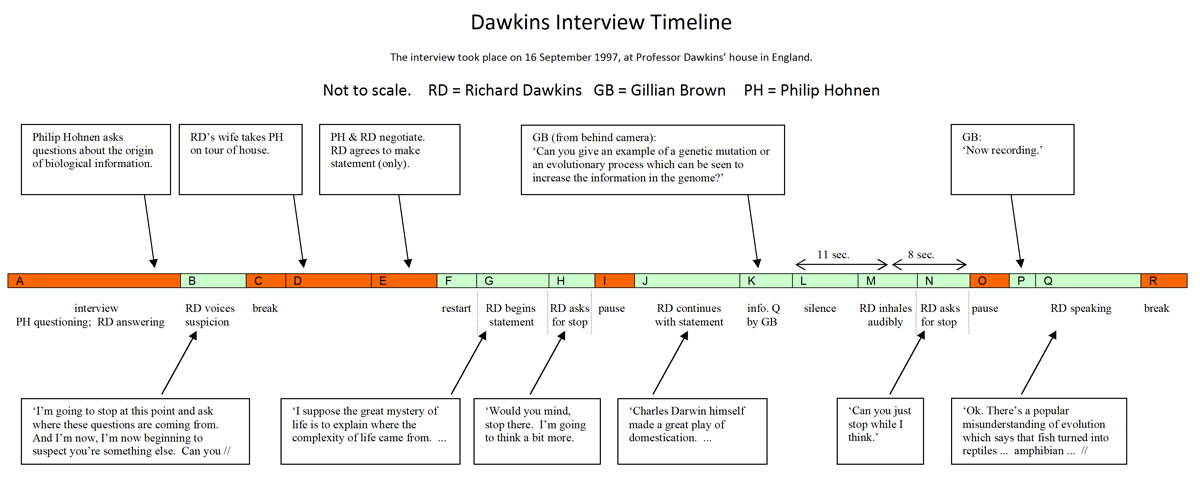
| |||||||||||